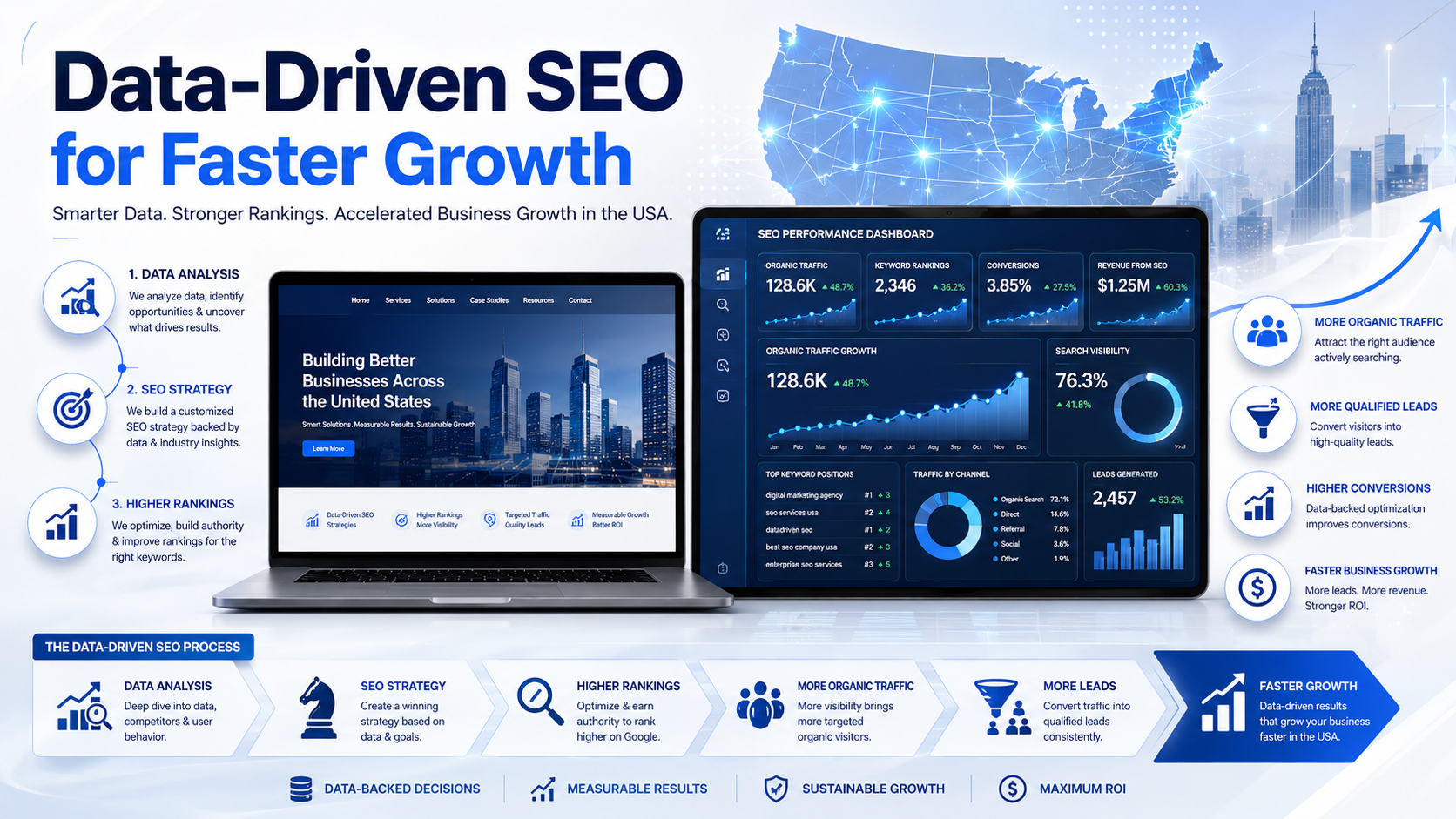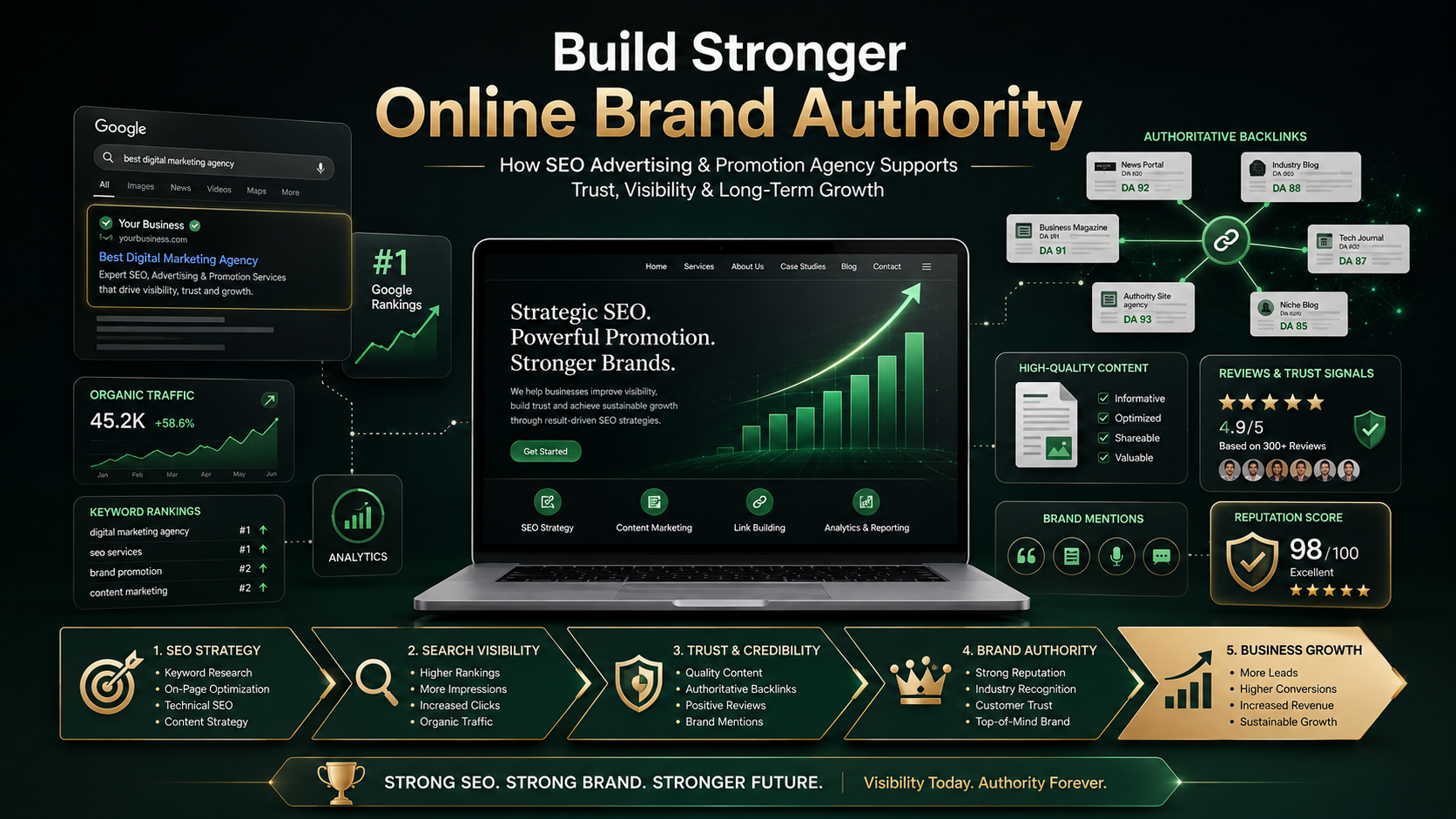

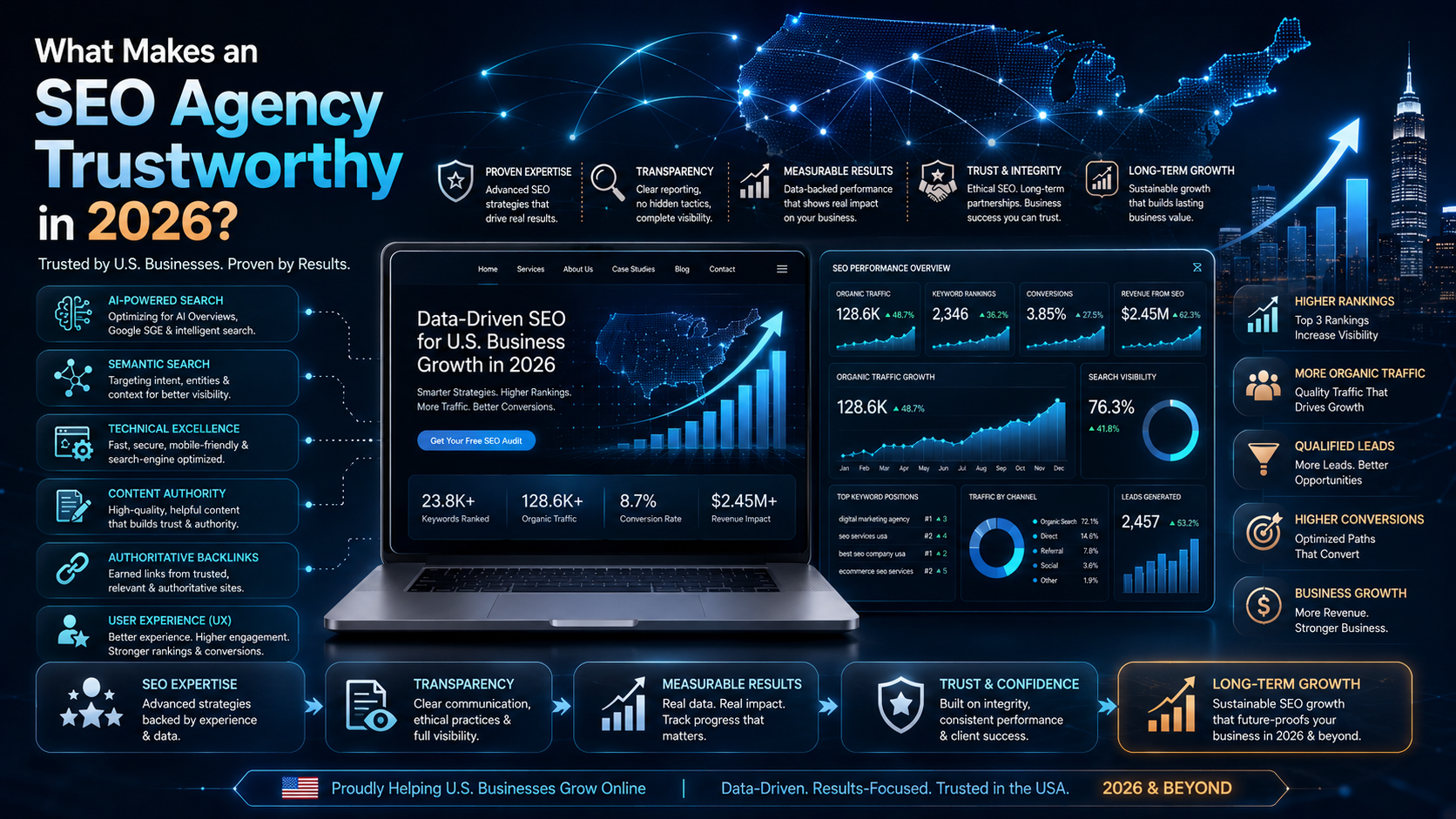
The search landscape in 2026 has officially moved past the “blue links” era. For USA businesses, trust is no longer built on promises of #1 rankings—it’s built on recognition.
With AI-driven search, GEO (Generative Engine Optimization), and Google’s continuous March 2026 Core Updates, the criteria for the “best” agency has shifted (Lumar, 2026). If you are looking for a partner to navigate this new reality, here is what defines the top-tier SEO marketing agencies that US businesses trust today.
Mastery of the “New Trinity”: SEO, GEO, and AEO
In 2026, organic visibility requires a triple-threat strategy. Dominating the search landscape means moving beyond standard rankings to capture real estate in AI-generated summaries and voice-activated queries. By integrating traditional search principles with generative and answer-based optimization, businesses ensure they are not just indexed, but actively recommended. This holistic approach builds massive authority, ensuring your brand stays relevant whether a user is scrolling through Google or chatting with an AI assistant.
Traditional SEO
Traditional SEO remains the bedrock of digital authority. It focuses on technical health, keyword relevance, and high-quality backlink profiles to drive organic traffic directly to your website. By aligning content with specific user intent and optimizing for core web vitals, you establish a credible destination. In a multi-platform era, a well-optimized site serves as the ultimate “source of truth” for search engines.
GEO (Generative Engine Optimization)
GEO is the frontier of visibility in the age of AI. This strategy ensures your brand is cited and featured within generative summaries produced by models like Gemini and ChatGPT. By focusing on semantic relevance and “chunkable” data, you make it easy for AI to extract and credit your insights. It’s about becoming a primary reference point for the world’s most advanced engines.
AEO (Answer Engine Optimization)
AEO targets the immediate needs of the modern “zero-click” searcher. This specialized branch of SEO focuses on providing direct, concise answers that occupy featured snippets and “People Also Ask” boxes. By structuring content in a clear Q&A format, you capture voice search queries and assistant-driven results. AEO positions your brand as the definitive, instantaneous solution to the specific questions your customers are asking.
A “Human-First” Content Philosophy
Google’s 2026 algorithm updates have become surgical at identifying and demoting “AI spam”—content created solely for ranking without adding unique value (Found, 2026). The best agencies have pivoted away from high-volume, robotic output.
Instead, they focus on:
Information Gain
Information gain is the ultimate differentiator in an AI-saturated market. It involves providing unique data, personal case studies, or fresh perspectives that aren’t already present in the existing search results. Google prioritizes content that adds new value rather than simply rephrasing old ideas. By sharing original insights, you satisfy both the algorithm’s hunger for novelty and the user’s need for expertise.
Entity-Rich Content
Entity-rich content focuses on building semantic relationships between concepts rather than just chasing keywords. By clearly defining people, places, and things within your niche, you help search engines understand the context of your authority. This structured approach makes your data “extractable” for generative engines, ensuring your brand is recognized as a key entity within your specific industry or service area.
Anti-AI Footprints
To maintain trust, content must shed the predictable patterns of standard language models. Anti-AI footprints are created through varied sentence structures, authentic storytelling, and human-centric transitions. By avoiding robotic “balanced” conclusions and generic phrasing, you create a natural flow that resonates with readers. This approach ensures your writing feels genuine, bypassing AI detection while building a deep, emotional connection with your audience.
Radical Transparency in Reporting
In the past, agencies hid behind “keyword rankings.” Today’s top US agencies report on Brand Recognition Metrics. They show you:
- How many times your brand was cited by an AI Assistant.
- Your “Share of Voice” in generative summaries.
- Conversion rates from “Zero-Click” interactions (Search Engine Land, 2026).
Deep Industry Specialization (E-E-A-T)
Trust is highest when an agency understands the technical nuances of your specific niche—whether it’s HVAC, Junk Removal, or High-Tech SaaS. In 2026, Google’s E-E-A-T (Experience, Expertise, Authoritativeness, Trustworthiness) guidelines are heavily weighted toward content that proves real-world experience (Store Transform, 2025).
A trusted agency won’t just write about “Roofing”; they’ll demonstrate they understand local building codes, weather patterns, and specific material benefits, which signals true authority to search engines.
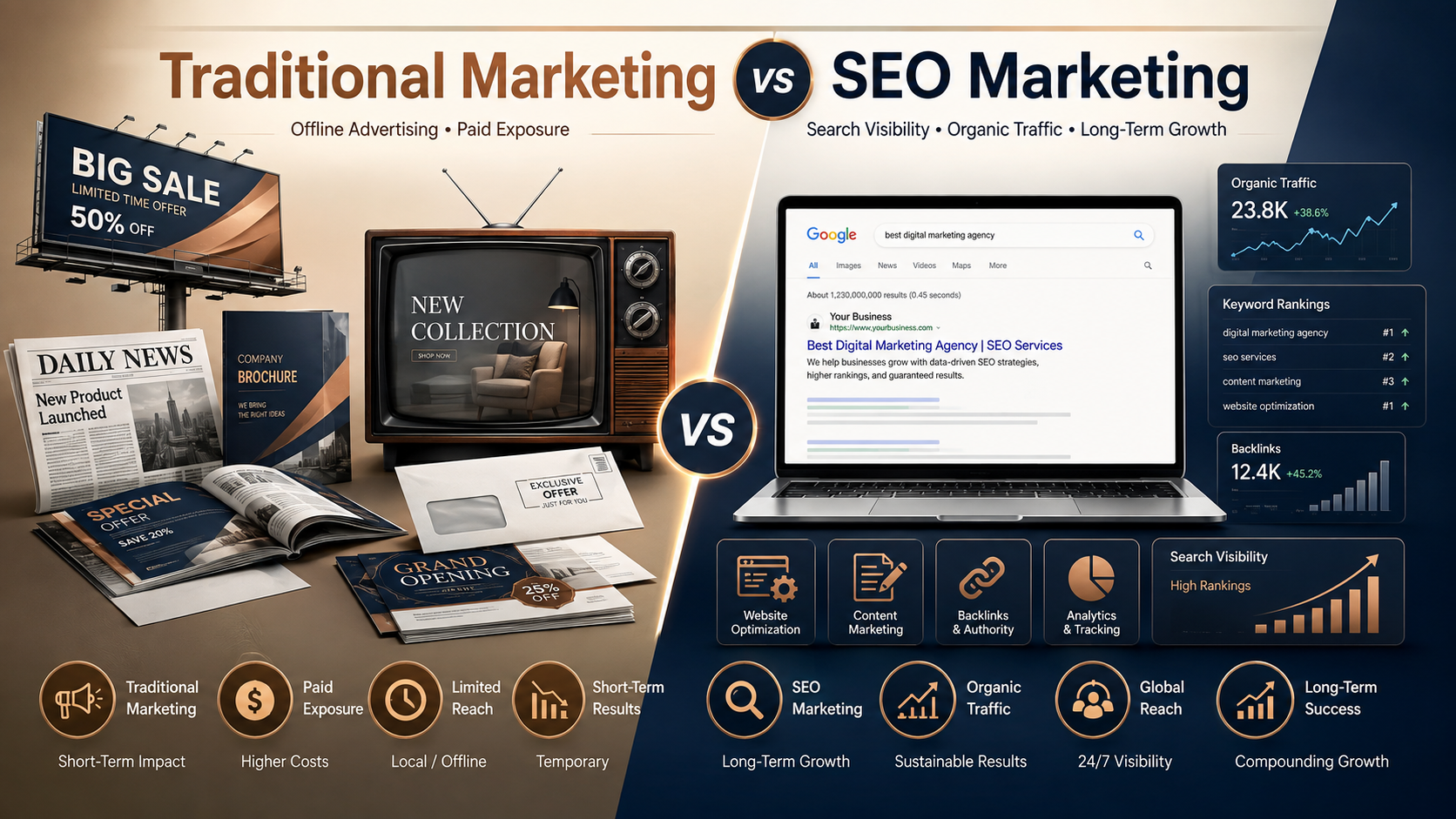
Comparison: Traditional vs. 2026 Trusted SEO Agencies
Feature |
Traditional Agency (Old School) |
2026 Trusted Agency (Modern) |
| Primary Goal | Clicks and Rankings | Recognition and Authority |
| Content Strategy | High Volume / AI-Generated | Low Volume / High Utility / Human-Led |
| Search Focus | Google Search Links | Multi-Engine (Google, Gemini, ChatGPT) |
| Success Metric | Position #1-10 | Generative Citations & Entity Visibility |
Final Verdict
The best SEO marketing agency in 2026 is one that views your website not just as a destination for traffic, but as a source of truth for the entire internet. By focusing on semantic relevance, technical “chunkability,” and genuine human expertise, they ensure your business isn’t just found—it’s recommended.