

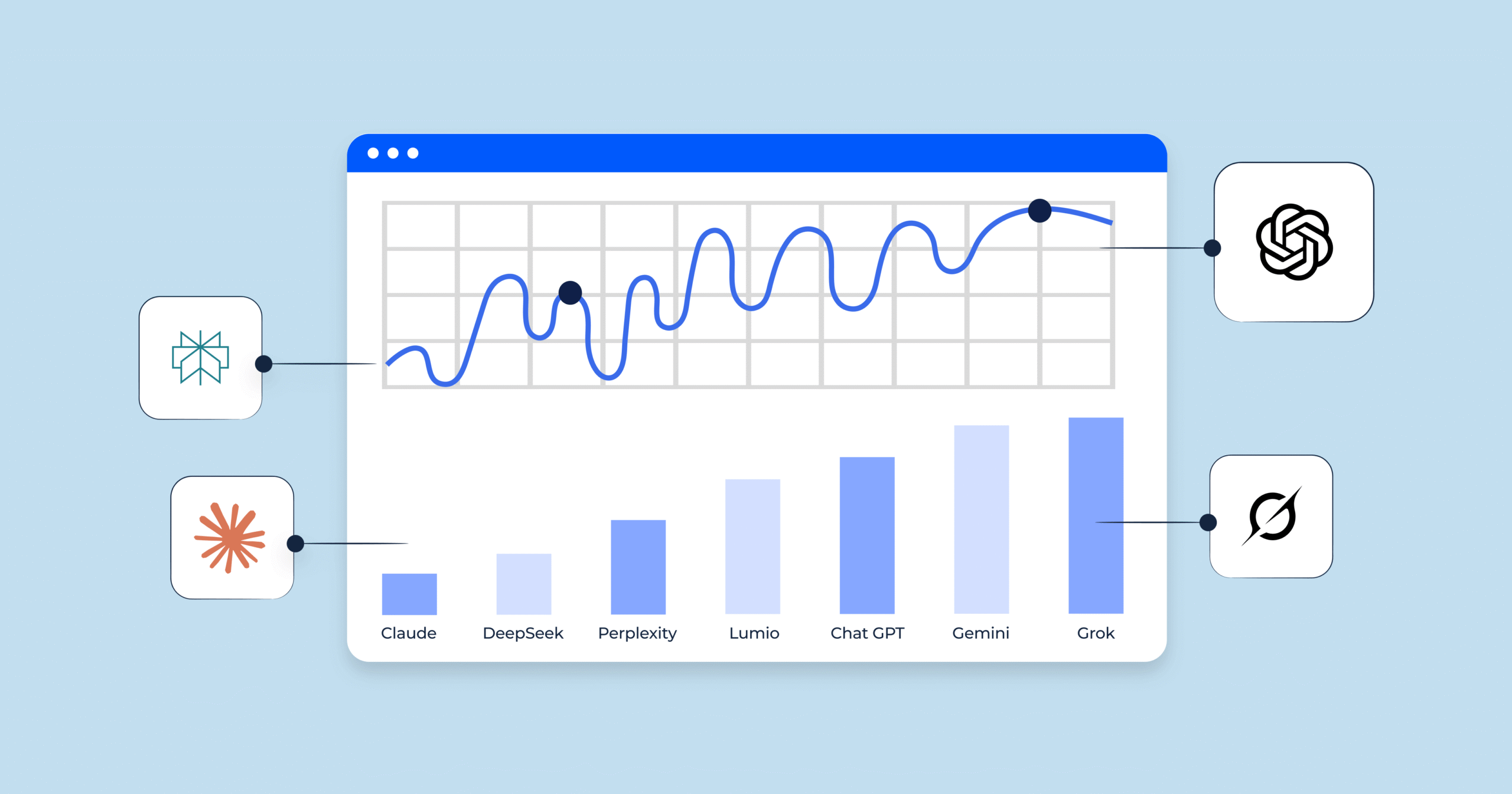
Traditional SEO isn’t completely dead, but the “10 blue links” monopoly is officially over. Today, millions of users ask complex questions directly to Large Language Models (LLMs) like ChatGPT, Google Gemini, Perplexity, and Claude.
When a user prompts an AI for a recommendation—like “What are the best localized SEO strategies for a home remodeling contractor?”—the LLM doesn’t just guess. It scans its indexed data, selects the most credible sources, synthesizes an answer, and attaches clickable citations.
If your content isn’t structured for AI retrieval, your brand simply doesn’t exist in these conversations. This shift from ranking on Search Engine Result Pages (SERPs) to winning AI citations is called Generative Engine Optimization (GEO) or LLM SEO.
Here is exactly how to optimize your website so LLMs fetch, cite, and recommend your brand.
Unblock and Streamline AI Crawler Access
Before an LLM can recommend your content, its specialized web crawlers must be able to read your source code. This is the most fundamental step, yet it’s where many webmasters unknowingly fail.
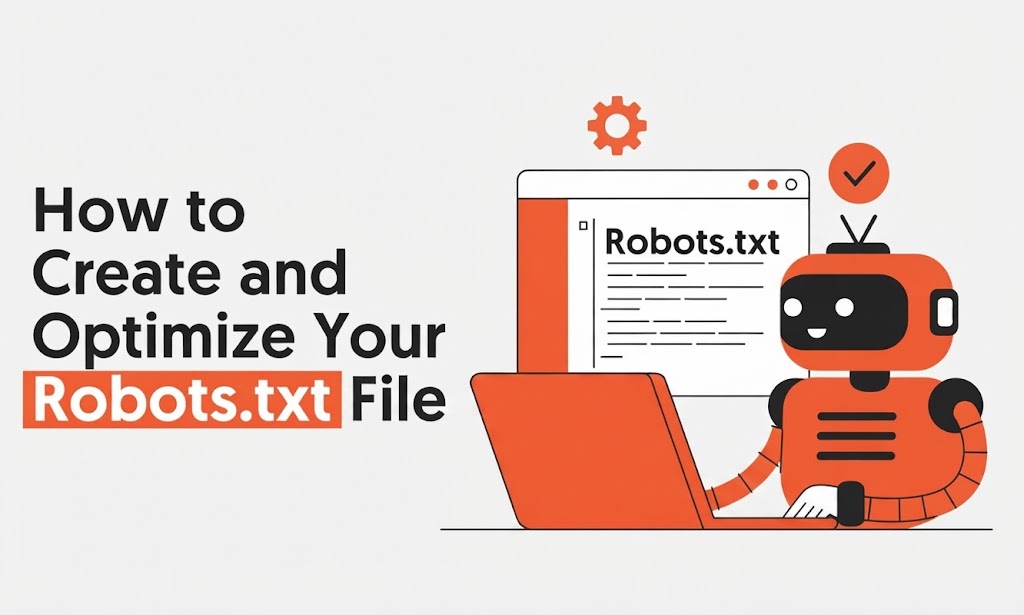
Audit Your Robots.txt
Before an LLM can recommend your content, its specialized web crawlers must be able to read your source code. Check your configurations to ensure you aren’t blocking major AI bots. Explicitly allow access to key user-agents like OAI-SearchBot (OpenAI), PerplexityBot (Perplexity), Google-Extended (Gemini), and ClaudeBot (Anthropic). Regular audits prevent accidental directives from locking out the very engines driving generative search traffic to your site.
The Cloudflare Trap
Many default security suites and firewalls automatically block AI bots to save server bandwidth or prevent content scraping. However, this safety measure can completely blind modern search engines to your website. Check your security dashboards and web application firewalls (WAF) to verify that legitimate, search-focused AI crawlers are explicitly whitelisted. Preventing this accidental lockout ensures your brand remains visible in generative search recommendations.
Ditch Heavy Client-Side JavaScript
LLM crawlers read raw HTML server responses rather than executing complex scripts. If your core content, data tables, or pricing models rely heavily on client-side rendering—loading via JavaScript only after a user opens the page—the LLM will see a blank slate. Shift to Server-Side Rendering (SSR) or Static Site Generation (SSG) so that all textual value is immediately present in the source code upon delivery.
Keep Content Out of Interactive UI Elements
Information locked behind login screens, paywalls, or hidden inside interactive sliders and click-to-reveal accordions is completely invisible to AI bots. LLMs extract seamless, contextual text blocks to synthesize answers for users. If your primary insights require a click, scroll, or tab switch to become visible, move them into plain text paragraphs. If you want your content cited, it must sit openly in the main HTML layout.
Engineer an “Answer-First” Information Architecture
LLMs function by extracting highly relevant information chunks from web pages to compile an aggregate response. To maximize your chances of extraction, you must format your content for easy machine parsability.
Maintain Strict Heading Hierarchies
Use explicit H2 and H3 tags that ask or directly state the core sub-topic. Avoid vague, creative headers like “Looking Deeper” or “A Clearer View.” Instead, use clear, entity-driven headers like ## Concrete Leveling Cost Factors or ### Step-by-Step Grout Sealing Process.
Write Self-Contained Paragraphs
Because LLMs often extract standalone paragraphs or single sentences to form a response snippet, every paragraph should provide absolute context on its own. Avoid vague pronouns like “This method allows…” or “They fix this by…” Instead, use concrete nouns: “Polyurethane foam injection allows contractors to level concrete slabs without a full replacement.”
Utilize Structured Data Frameworks
Data shows that pages utilizing clean, scannable formatting have significantly higher visibility in generative search results.
- Bullet points for unordered features or specific criteria.
- Numbered lists for sequential, step-by-step methodologies.
- Comparison tables for data matrices, pricing models, or feature sets.
Map Content to “Fan-Out” Sub-Queries
When a user inputs a highly specific conversational prompt into an LLM, the model often breaks that complex question down into multiple hidden, smaller searches—known as fan-out queries—to gather background facts.
┌──► Sub-Query 1: “Average roof replacement cost 2026”
│
[User Prompt] ──────┼──► Sub-Query 2: “Architectural shingles vs. metal lifespan”
│
└──► Sub-Query 3: “Signs of hidden roof deck rot”
To optimize for this behavior, analyze your primary topic ecosystem and build deep topical clusters that address all second-degree semantic nodes. If you write an article about commercial roof maintenance, ensure you have explicitly defined sections or dedicated sub-pages answering pricing, material comparisons, and specific failure warning signs. You want your site to satisfy multiple parts of the AI’s background research loop simultaneously.
Maximize Digital Entity Authority & E-E-A-T
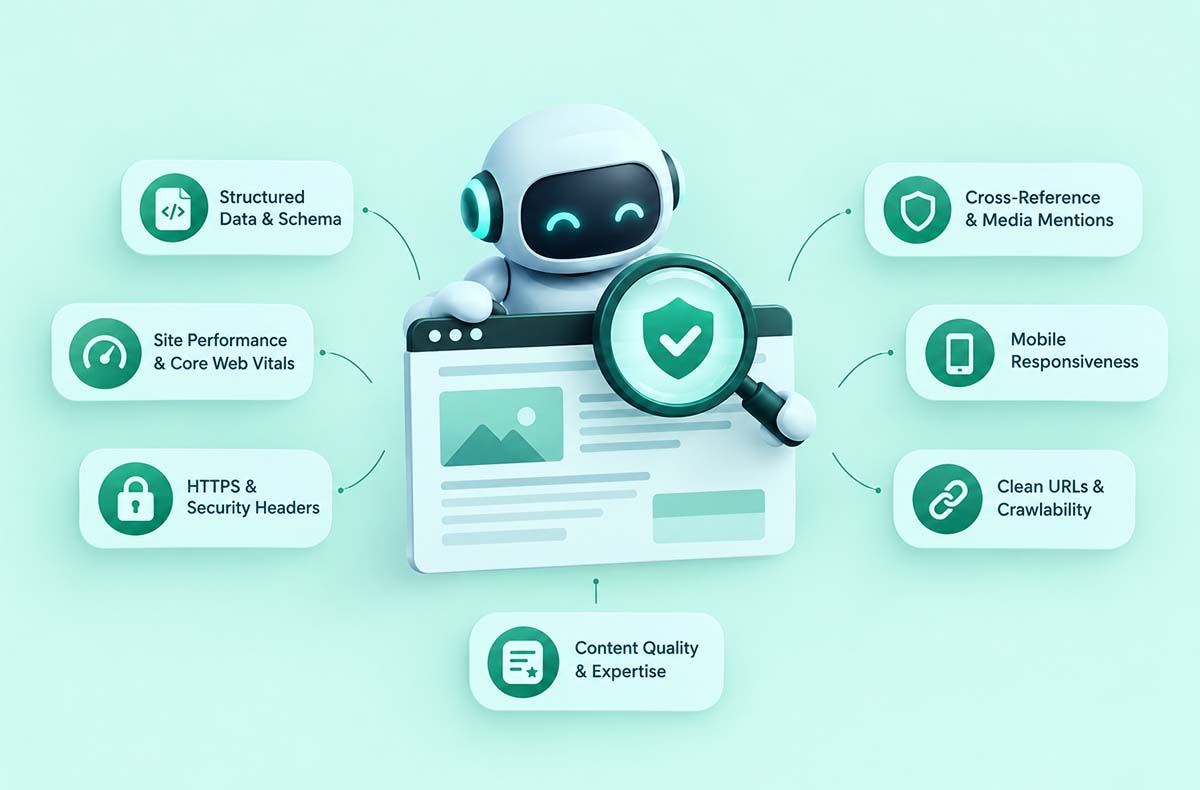
LLMs prioritize content from established, verifiable “entities” (brands, organizations, or individuals recognized within a specific industry niche). The models cross-reference information across the web to build a trust profile of your brand.
Optimization Vector |
Tactical Action Item |
Impact on LLM Selection |
| Schema Markup | Implement Organization, Article, Person, and FAQ Schema. | Acts as a direct translation layer, allowing AI to map your data into its Knowledge Graph. |
| Author Footprints | Connect all content to explicit author bylines backed by detailed bio pages and external links to professional profiles (e.g., LinkedIn). | Validates the Experience and Expertise signals required for high-stakes topics. |
| Fact Citations | Back up claims with links to original research, academic studies, or (.gov/.edu) data sources within the past 18 months. | Signals to the LLM that your content is mathematically or factually safe to quote without hallucination risk. |
| Off-Page Mentions | Earn unlinked brand mentions, press coverage, and authentic customer reviews on third-party directories. | Builds the cross-web consensus that AI models look for when validating a brand’s Trustworthiness. |
Write for Direct Answer Extraction
When a model processes a query, it actively looks for concise “definition sentences” and structural patterns it can pull directly into its interface.
The Extraction Blueprint
Start sections with a direct, declarative statement using an “X is Y” or “To achieve A, you must B” format. Keep this initial summary paragraph tightly constrained to 30–40 words. Once the direct answer is established, follow up with your nuanced industry analysis, custom data points, and real-world case study evidence.
By reducing structural friction and heavily anchoring your content in verifiable expertise, you transform your website from a passive archive into an authoritative database that modern AI systems confidently source and recommend.
Conclusion
Ranking in the LLM era requires a shift from chasing keyword volumes to optimizing for extraction and trust. By eliminating technical barriers like aggressive firewalls or hidden text, and structuralizing content for direct answers, you ensure AI crawlers can effortlessly read and parse your insights. Build an authoritative, schema-backed brand entity, format for machine readability, and your website will transition from a traditional search listing to an essential, AI-cited authority.