
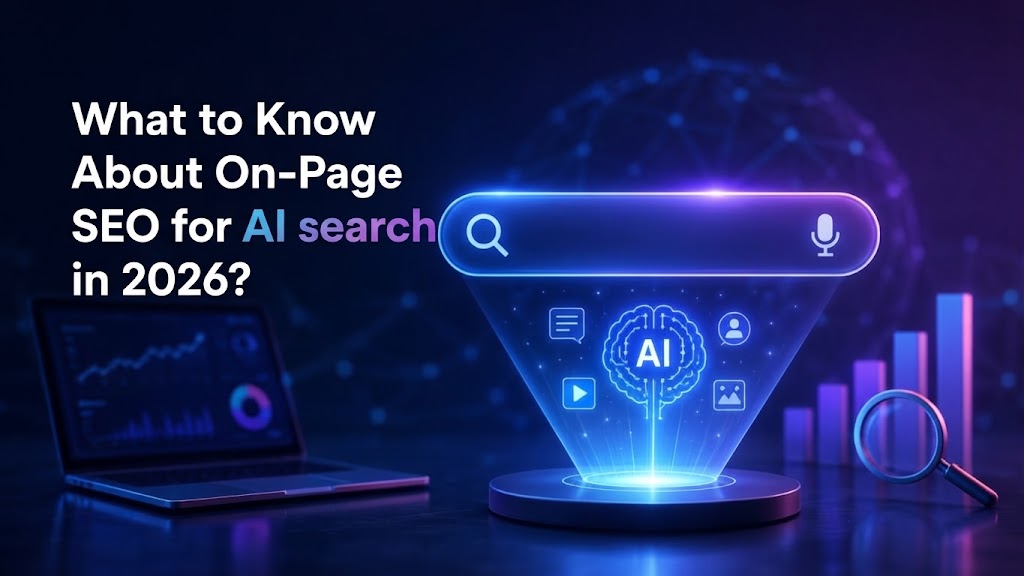
The search landscape is evolving rapidly, and 2026 marks a significant shift toward AI-powered search experiences. Search engines are no longer limited to displaying a list of links. Instead, they generate direct answers, summaries, and recommendations using artificial intelligence. As a result, businesses, marketers, and website owners must adapt their on-page SEO strategies to ensure their content remains visible in AI-driven search results.
Understanding how AI search works and optimizing content accordingly can help websites maintain strong rankings, improve visibility, and attract qualified traffic.
Understanding AI Search in 2026
AI search uses advanced language models and machine learning algorithms to understand user intent, analyze content quality, and generate accurate responses. Rather than focusing solely on keywords, AI systems evaluate context, expertise, trustworthiness, and the overall usefulness of content.
Modern search engines aim to provide complete answers to user questions. This means websites that deliver clear, structured, and authoritative information are more likely to be featured in AI-generated responses.
Focus on Search Intent Instead of Keywords Alone
Traditional SEO often emphasized keyword density and exact-match phrases. In 2026, AI search prioritizes search intent.
Content should answer the questions users are asking rather than simply repeating target keywords. Before creating content, identify the problems, concerns, and goals of your audience. Develop comprehensive pages that address these topics naturally and thoroughly.
When content aligns with user intent, AI systems can better understand its relevance and usefulness.
Create Clear and Structured Content
Clear and structured content helps both users and AI search systems understand information more effectively. Organize your pages with logical headings, subheadings, short paragraphs, and bullet points to improve readability. A well-structured page allows search engines to identify key topics and relationships between ideas. This approach also enhances user engagement, making it easier for visitors to find answers quickly while increasing the likelihood of appearing in AI-generated search results.
Best Practices Include:
- Using a clear H1 heading
- Organizing content with H2 and H3 subheadings
- Writing short paragraphs
- Including bullet points and numbered lists
- Adding concise summaries where appropriate
Structured content improves both user experience and AI comprehension.
Prioritize E-E-A-T Signals
E-E-A-T, which stands for Experience, Expertise, Authoritativeness, and Trustworthiness, plays a vital role in AI search rankings. Search engines favor content created by knowledgeable sources that provide accurate and reliable information. Demonstrating real-world experience, showcasing author credentials, and maintaining content accuracy can strengthen trust signals. By prioritizing E-E-A-T, websites can build credibility, improve search visibility, and increase their chances of being referenced in AI-powered search responses.
To Strengthen E-E-A-T:
- Publish accurate and well-researched information
- Include author credentials and expertise
- Cite credible sources when necessary
- Update content regularly
- Showcase real-world experience and case studies
AI systems increasingly evaluate content quality based on these trust signals.
Optimize for Conversational Queries
As users increasingly interact with AI search tools through natural language questions, optimizing for conversational queries has become essential. Create content that directly answers common questions your audience may ask. Use a natural writing style and include question-based headings where appropriate. This strategy helps search engines understand the intent behind searches and improves your content’s chances of appearing in AI-generated summaries, voice search results, and conversational search experiences.
Instead of targeting only short keywords, create content that answers specific questions such as:
- What are the benefits of AI SEO?
- How does AI search rank content?
- What is the future of on-page SEO?
Adding FAQ sections can help capture conversational search traffic while providing valuable information to users.
Use Semantic SEO Techniques
Semantic SEO focuses on covering a topic comprehensively rather than relying on a single keyword. By including related terms, concepts, and subtopics, you help AI search systems understand the broader context of your content. This approach improves topical relevance and authority while creating a more valuable experience for readers. Comprehensive content that addresses multiple aspects of a subject is more likely to rank well and be featured in AI-generated search results.
For example, an article about AI search optimization should naturally discuss:
- User intent
- Content quality
- Structured data
- Entity optimization
- Search experience
- AI-generated answers
By covering related concepts, websites help AI systems understand topic relevance and depth.

Improve Content Readability
Content readability is crucial for both user satisfaction and AI search optimization. Use clear language, concise sentences, and well-organized sections to make information easier to understand. Avoid overly complex terminology unless necessary and ensure that your content flows naturally from one idea to the next. Readable content encourages visitors to stay longer on your website while helping AI systems accurately interpret and present your information in search responses.
To Improve Readability:
- Use simple language
- Avoid unnecessary jargon
- Write concise sentences
- Break up large text blocks
- Include descriptive headings
Content that is easy to understand is more likely to be referenced in AI-generated search results.
Leverage Schema Markup
Schema markup provides additional context about your content, helping search engines understand page elements more effectively. Structured data can highlight articles, FAQs, reviews, products, and other important information. By implementing relevant schema types, websites can improve their eligibility for rich search features and AI-generated summaries. This added layer of information enhances content visibility, supports better indexing, and increases the likelihood of attracting qualified organic traffic.
Common Schema Types Include:
- Article Schema
- FAQ Schema
- Organization Schema
- Product Schema
- Review Schema
Optimize for Entity-Based Search
Entity-based search focuses on identifying people, places, organizations, products, and concepts rather than relying solely on keywords. To optimize for this approach, create content that clearly defines important entities and their relationships. Consistent brand mentions, topic clusters, and authoritative information help search engines recognize your expertise. Strong entity optimization improves contextual understanding, making your content more relevant to AI search systems and increasing its visibility across search experiences.
To Improve Entity Recognition:
- Mention important industry terms naturally
- Build topical authority around specific subjects
- Maintain consistent brand information across the web
- Create content clusters around core topics
Strong entity optimization helps AI systems connect your content to relevant search queries.
Keep Content Fresh and Updated
Regularly updating content ensures that your website remains relevant and accurate in a rapidly changing digital landscape. AI search engines often favor current information because it provides users with the most reliable answers. Review existing pages to update statistics, trends, examples, and industry insights. Maintaining fresh content demonstrates authority and trustworthiness while improving user satisfaction. Consistent updates can also help preserve rankings and strengthen your overall search performance.
Regularly Review and Update:
- Statistics
- Industry trends
- Examples
- Case studies
- Best practices
Fresh content signals relevance and reliability to both users and AI-powered search systems.
Enhance User Experience
User experience remains a critical factor in modern SEO and AI search visibility. Fast-loading pages, mobile-friendly designs, intuitive navigation, and accessible content contribute to a positive browsing experience. When visitors can easily find information and interact with your website, engagement metrics often improve. Search engines recognize these positive signals and may reward them with better rankings. Prioritizing user experience helps build trust, increase conversions, and support long-term organic growth.
Key UX Factors Include:
- Fast page loading speed
- Mobile responsiveness
- Easy navigation
- Accessible design
- Minimal intrusive advertisements
A positive user experience supports better engagement metrics and stronger search performance.
The Future of On-Page SEO for AI Search
As AI continues to transform search, on-page SEO is becoming more focused on content quality, expertise, context, and user satisfaction. Success in 2026 requires moving beyond traditional keyword-focused tactics and embracing a strategy centered on helping users find accurate and meaningful information.
Websites that create trustworthy, well-structured, and intent-driven content will be better positioned to earn visibility in AI-generated search experiences and maintain long-term organic growth.
Conclusion
On-page SEO for AI search in 2026 is about creating content that serves both users and intelligent search systems. By focusing on search intent, structured content, E-E-A-T, semantic SEO, entity optimization, and user experience, businesses can improve their chances of appearing in AI-generated answers and search results. As search technology continues to evolve, adapting to these best practices will be essential for maintaining online visibility and staying ahead of the competition.