
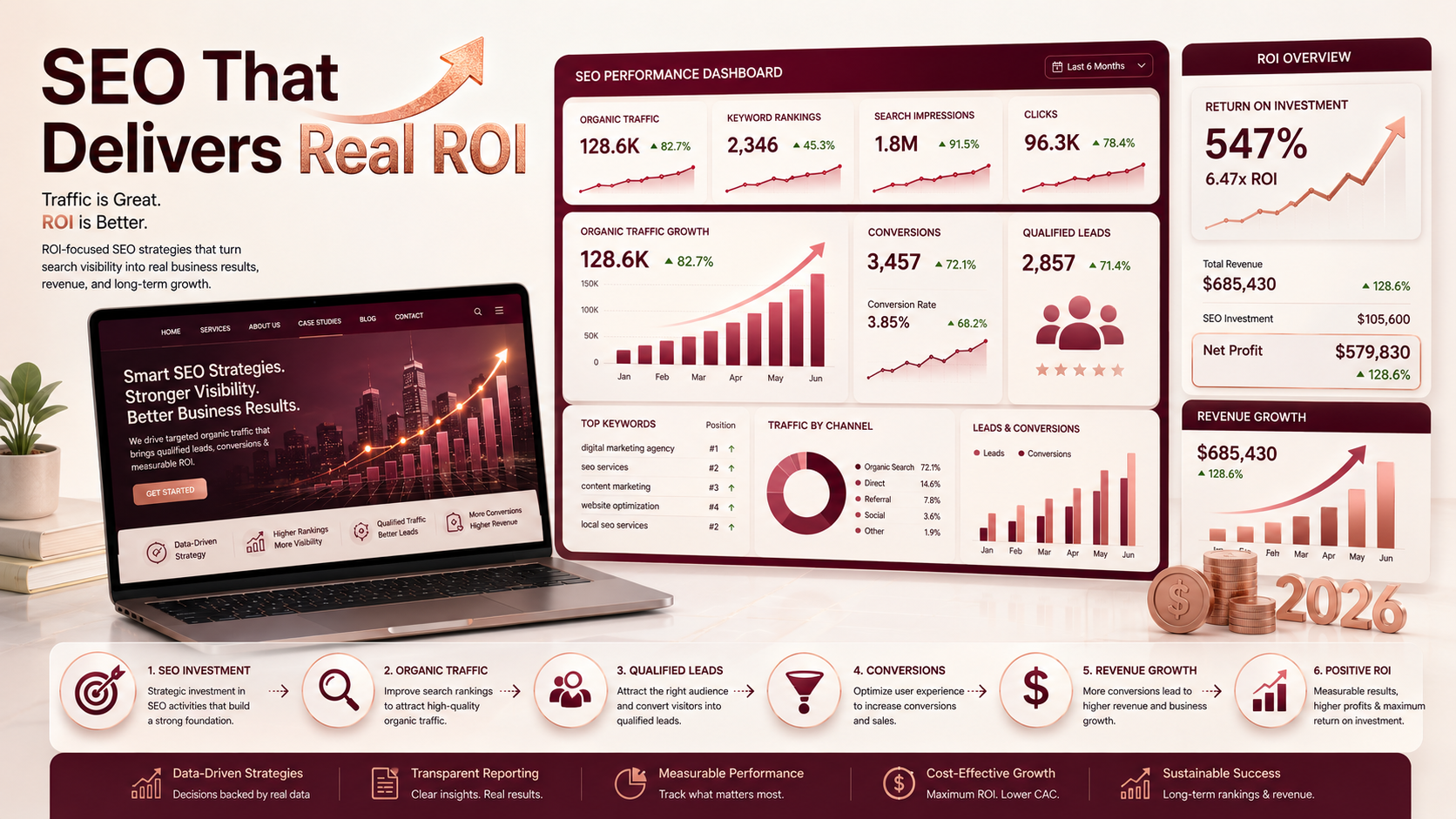
In the current digital landscape, ranking on the first page of search results is no longer the ultimate goal. You can have thousands of visitors hitting your site daily, but if those clicks don’t turn into customers, your SEO strategy is effectively a vanity project.
This is where ROI-focused SEO comes in. It shifts the focus from “how much traffic can we get?” to “how much revenue is this traffic generating?”
Beyond Vanity Metrics: Traffic vs. Revenue
Traditional SEO often obsesses over search volume and keyword rankings. While these metrics matter, they don’t pay the bills. An ROI-centric approach prioritizes high-intent keywords—terms used by people ready to pull out their credit cards rather than those just browsing for information.
- Vanity Metric: Ranking #1 for “how to fix a roof.”
- ROI Metric: Ranking #1 for “emergency roof repair in [City Name].”
By targeting the latter, you ensure that every dollar spent on content and optimization is working toward a measurable financial return.
Building Long-Term Asset Value
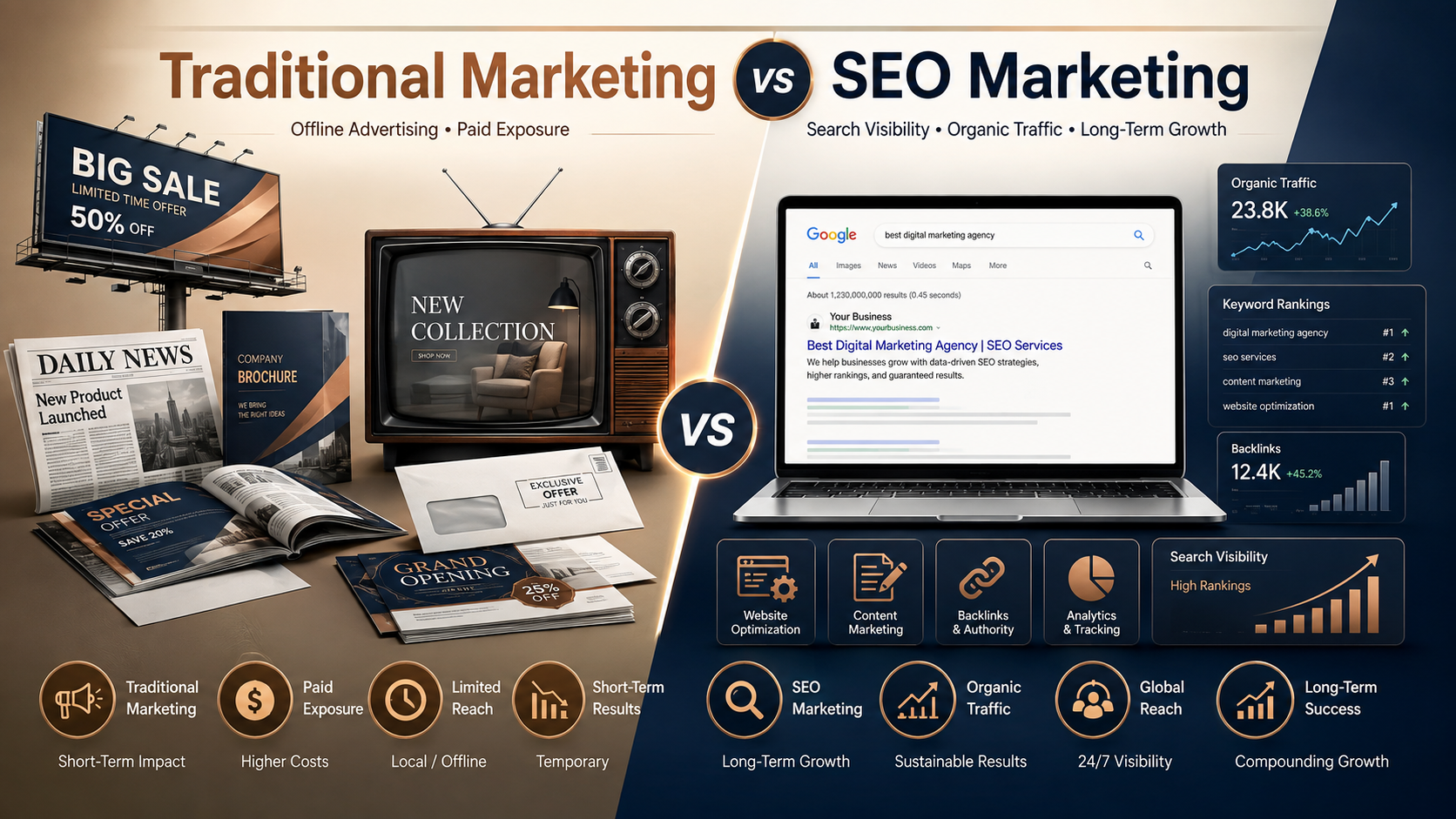
Unlike paid advertising (PPC), where the lead flow stops the moment you stop paying, SEO is a long-term investment. ROI-focused SEO treats your website as a digital asset. By creating high-quality, human-centric content that satisfies Google’s E-E-A-T guidelines, you build a “compounding interest” effect.
The work you do today to optimize a service page or a technical blog post will continue to attract organic leads for months—or even years—without the recurring cost per click.
Enhancing User Experience (UX) and Conversion
A core part of modern SEO is Search Task Accomplishment. Search engines now favor websites that provide a seamless user journey. ROI-focused SEO involves:
Faster Loading Speeds
In 2026, speed is the ultimate currency. If your site takes more than two seconds to load, potential leads bounce to a competitor before your header even appears. Google prioritizes performance metrics because they directly correlate with user satisfaction. By optimizing Core Web Vitals and streamlining code, you reduce friction, lower bounce rates, and significantly boost your conversion potential.
Mobile Optimization
With the vast majority of search traffic originating from handheld devices, a mobile-first approach is non-negotiable. It isn’t just about resizing images; it’s about thumb-friendly navigation, readable fonts, and responsive layouts that adapt to any screen. Effective mobile optimization ensures that users on the go can access your services effortlessly, directly impacting your local search rankings and overall ROI.
Clear CTAs
High-quality content is meaningless if the reader doesn’t know what to do next. Clear, authoritative Calls to Action (CTAs) bridge the gap between information and conversion. Whether it’s a “Get a Free Quote” button or a direct “Call Now” link, your CTAs must be strategically placed and visually distinct. They turn passive readers into active leads, driving measurable business growth.
Dominating AI Search (GEO and AEO)
As we move further into 2026, search is evolving. Between Generative Engine Optimization (GEO) and Answer Engine Optimization (AEO), your content needs to be “extractable.”
An ROI-focused strategy ensures your brand is the one cited by AI agents when a user asks a specific service-related question. If your content is semantically relevant and structured correctly, you become the authoritative entity that AI search engines trust and recommend.
Measurability and Scalability
One of the biggest advantages of focusing on ROI is the ability to pivot based on data. By tracking conversions instead of just clicks, businesses can identify exactly which pages are driving profit. This allows you to:
- Double down on high-performing service categories.
- Refine content that has high traffic but low conversion.
- Scale your marketing budget with confidence, knowing exactly what the return will be.
Final Thoughts
Ultimately, ROI-focused SEO is the bridge between mere visibility and sustainable profitability. By prioritizing high-intent traffic, optimizing for technical performance, and aligning with modern search behaviors like GEO, you transform your website into a high-performance sales engine. Don’t settle for empty metrics. When you align your digital strategy with actual revenue goals, you ensure that every optimization effort contributes directly to long-term business growth and market dominance.