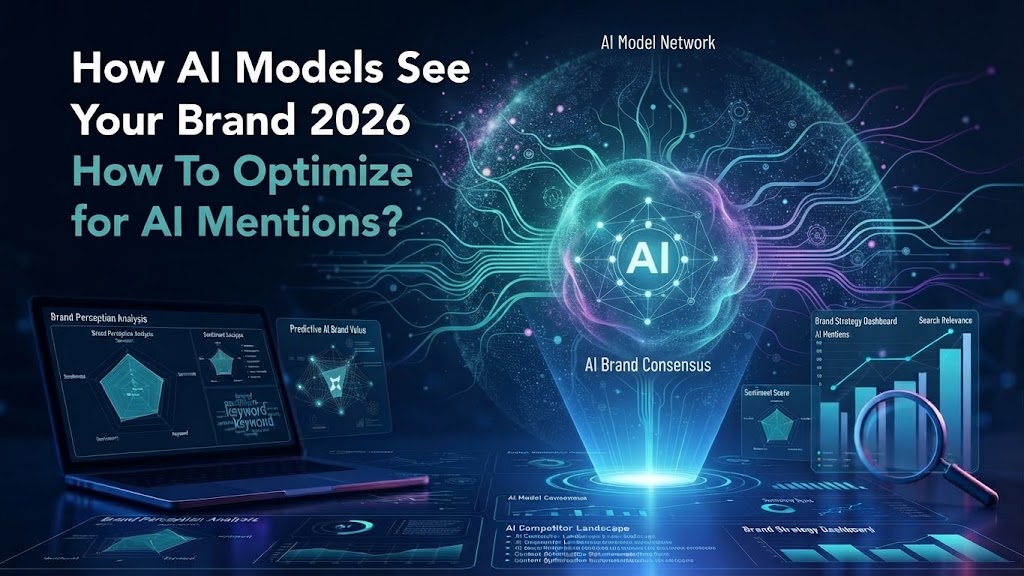

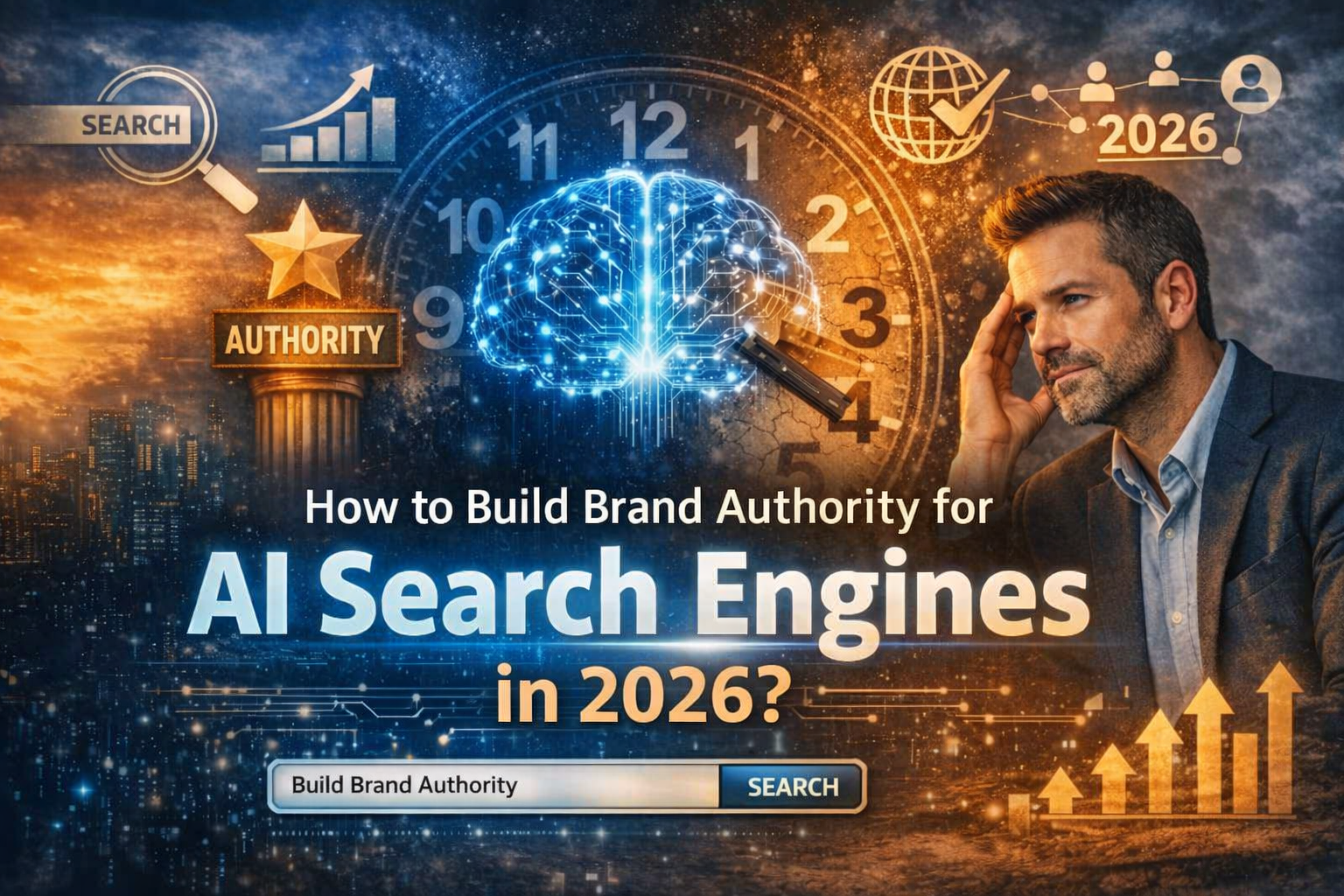
In 2026, the SEO landscape has shifted from “ranking on page one” to “becoming the trusted source.” With AI Overviews (AIO), ChatGPT Search, and Perplexity dominating how users find information, traditional keyword stuffing is dead.
To stay visible, you need to transition from SEO to AEO (Answer Engine Optimization). Here is your definitive guide to building brand authority in the age of AI search.
Optimize for the “Entity,” Not Just Keywords
In 2026, search engines prioritize “Entities”—distinct, verifiable concepts—over simple string-matching keywords. To build authority, your content must define your brand’s relationship to its niche. Don’t just scatter keywords; build a semantic web of information that proves your brand is a recognized subject matter expert. By focusing on topical depth and factual accuracy, you ensure AI models categorize your brand as a foundational source of truth within your specific industry.
Claim Your Digital Footprint
Consistency is the bedrock of AI trust. In 2026, fragmented data across the web signals low credibility. You must synchronize your brand’s name, address, and core mission across every platform—from LinkedIn and Crunchbase to specialized industry directories. A unified digital footprint allows AI crawlers to triangulate your identity easily, confirming that your brand is a legitimate, authoritative player in the market.
Implement Advanced Schema Markup
Think of Schema as the “instruction manual” for AI search engines. By using advanced structured data like Organization, Person, and Service tags, you translate your website’s prose into machine-readable code. In 2026, this technical layer is non-negotiable; it helps AI Overviews accurately extract your key data points, pricing, and expert credentials, ensuring your content is featured in high-value AI-generated summaries.
The “SameAs” Tag
The sameAs attribute is your most powerful tool for identity verification. By embedding this tag within your Schema markup, you explicitly tell AI models which social media profiles and third-party citations belong to you. This eliminates “identity noise” and prevents AI from hallucinating or confusing your brand with competitors. It bridges the gap between your website and your broader online reputation.
Structure Content for “Extractability”
In 2026, AI search engines don’t “read” your articles; they scan for data fragments to build Answer Overviews. To rank, your content must be highly extractable. This means using clear H2 and H3 tags, short paragraphs, and direct language. By organizing information into logical, bite-sized “chunks,” you make it effortless for Large Language Models (LLMs) to identify your core insights, attribute them to your brand, and serve them as the definitive answer.
The “Inverted Pyramid” Style
Adopt the inverted pyramid to capture AI-driven traffic. Lead every section with the most critical information—the direct answer—before diving into supporting details or nuance. By placing the “conclusion” first, you provide AI crawlers with an immediate, high-value snippet. This structure satisfies user intent instantly and significantly increases the likelihood of your brand being cited in summarized search results.
Use Comparison Tables
AI models excel at processing structured data, making comparison tables a goldmine for brand authority. Tables provide a clean, tabular format that allows AI to cross-reference features, pricing, or specifications without parsing complex prose. By presenting data clearly, you position your brand as a transparent authority, making it the primary source for “Best of” queries and competitive market analyses.
Micro-Summaries
In an era of rapid information consumption, micro-summaries are essential for both humans and AI. End every major section with a “Key Takeaways” or “TL;DR” list to reinforce your main points. These concise bullets act as “potted insights,” giving AI models a pre-packaged summary to display in search snippets, thereby boosting your visibility and establishing your brand’s expertise.

Prioritize “Information Gain” (E-E-A-T)
By 2026, the web is flooded with generic AI-generated content. Search engines now reward Information Gain—sharing something new that isn’t already in the AI’s training data.
Feature |
Low Authority Content |
High Authority (2026 Standard) |
| Data | Citing common stats | Using original, first-party survey data |
| Perspective | “How-to” generic guide | “How we solved X” (Case Study) |
| Visuals | Stock photos | Original screenshots, diagrams, & video |
| Quotes | Generic AI-style tips | Quotes from verified internal experts |
Master the “Real-Time” Search Layer
In 2026, the delay between publishing and indexing has vanished. AI search engines now prioritize the “Real-Time” layer, pulling live data from social feeds, news wires, and updated APIs to provide instant answers. To master this, your brand must stay active where the conversation is happening. By aligning your content with trending industry shifts and live data, you ensure your brand remains the most relevant authority in the AI’s immediate retrieval window.
The 30-Day Refresh
Static content is a liability in an AI-driven market. To maintain authority, implement a “30-Day Refresh” cycle for your top-performing assets. Update statistics, refine AI-friendly headers, and inject new insights to signal “semantic freshness” to crawlers. This consistent maintenance prevents your rankings from decaying and proves to AI models that your brand offers the most current, reliable information available today.
Digital PR is the New Link Building
Traditional backlinks are no longer the sole currency of authority. In 2026, AI engines look for “unlinked mentions” and citations across high-trust platforms like major news outlets and niche-expert podcasts. Digital PR secures these high-authority placements, validating your brand’s expertise in the eyes of AI. This third-party verification acts as a powerful trust signal, far outweighing the value of legacy SEO link-building tactics.
Focus on Conversational Long-Tail Queries
In 2026, the average search query has grown from 3 words to over 10 words. People are asking complex questions: “What is the best CRM for a 10-person remote team that uses Slack and needs automated invoicing?”
Answer the “Why” and “How”
In 2026, AI search engines move beyond simple “what is” definitions to solve complex user problems. To build authority, your content must provide deep, contextual explanations that address the “why” behind a trend and the “how” of a solution. Detailed, step-by-step guides and logic-based reasoning ensure your brand is cited as the primary expert for sophisticated, multi-step conversational queries.
Target “Recommendation” Queries
AI search is increasingly used as a personal advisor. To capture this traffic, optimize for “recommendation” queries by using comparison language like “best for small teams” or “top-rated for automation.” By clearly defining your product’s specific use cases and advantages, you help AI models confidently recommend your brand when users ask for tailored suggestions, driving high-intent, bottom-of-the-funnel organic traffic.
Final Thoughts
Building brand authority in 2026 requires a shift from traditional SEO to AI-centric strategies. By mastering entity optimization, extractable structures, and real-time updates, you ensure your brand remains the trusted source for modern answer engines. Stay agile, prioritize human expertise, and your authority will naturally dominate the evolving AI search landscape.