
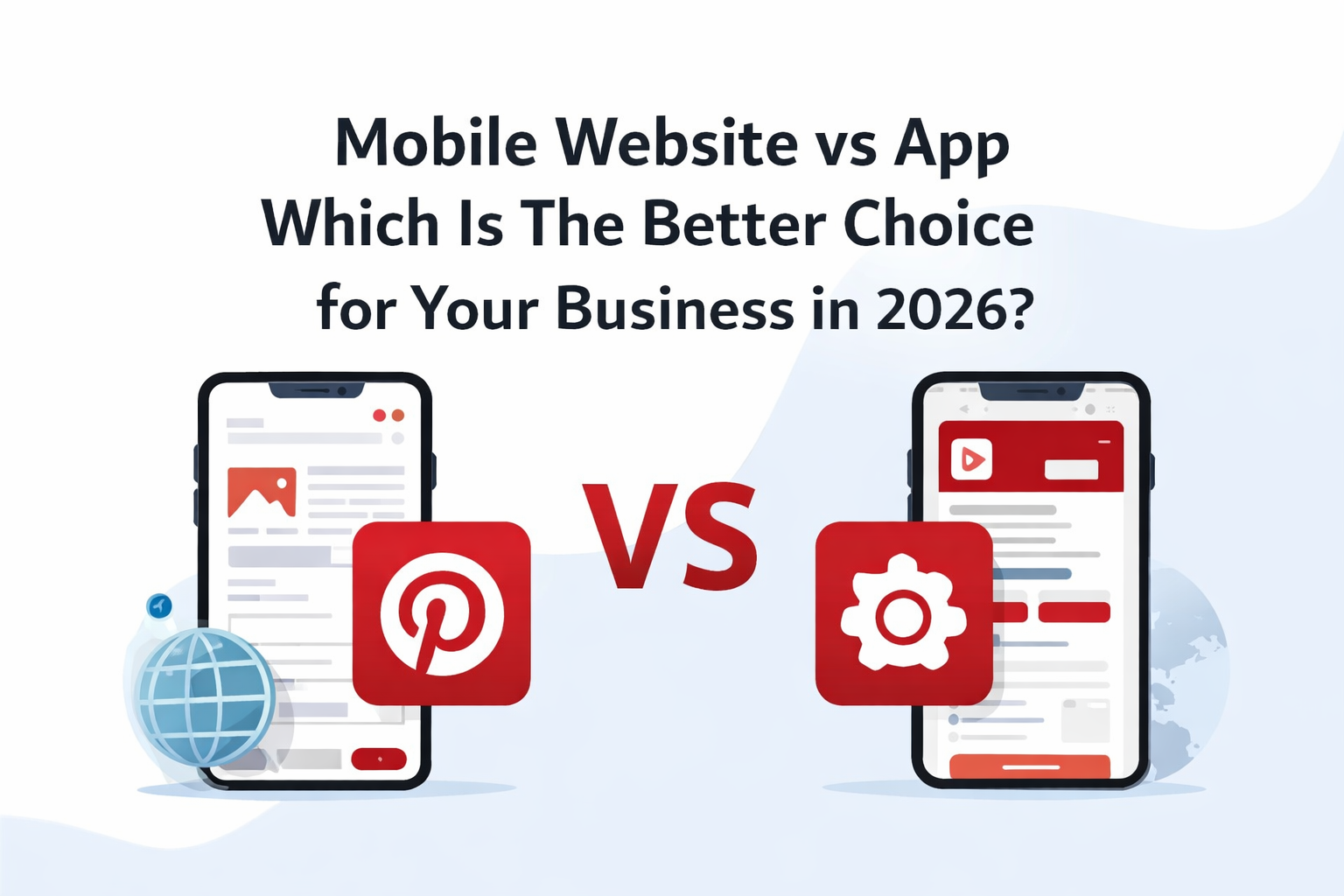
In 2026, the “mobile-first” era hasn’t just arrived—it has evolved. With mobile devices now driving over 70% of global internet traffic, the question is no longer if you should be on mobile, but how.
As a business owner, you’re likely standing at a digital crossroads: Do you invest in a sleek, high-performance Mobile App, or double down on a lightning-fast Mobile Website?
With the rise of 5G, AI-driven personalization, and Progressive Web Apps (PWAs), the lines are blurring. Here is the definitive guide to making the right choice for your business this year.
The Case for the Mobile Website (Reach & Accessibility)
In 2026, a mobile website remains the most powerful tool for universal reach. Unlike apps that require a download, a website is accessible to anyone with a browser and an internet connection. It breaks down barriers to entry, allowing your business to connect with global audiences instantly. For brands prioritizing discovery and high-volume traffic, the mobile web offers an unmatched gateway to engage new users across diverse devices and operating systems effortlessly.
The Pros
A mobile website offers unparalleled visibility and cost-efficiency. It ensures your brand is discoverable through search engines, provides a consistent experience across all devices, and eliminates the friction of app store downloads, making it the ideal choice for rapid growth.
Instant Accessibility
In a fast-paced digital economy, speed is everything. Mobile websites provide immediate access to your content without forcing users to visit an app store, enter passwords, or wait for downloads to complete. With a single click on a link from social media or search results, your customers are engaged, significantly reducing the bounce rates associated with app installation friction.
Superior SEO
Search engine visibility is the lifeblood of digital discovery. Mobile websites are fully indexable, meaning Google’s sophisticated 2026 algorithms can crawl every page to rank your business for specific keywords. This organic reach ensures that when potential customers search for solutions, your site appears front and center—a feat that closed-loop mobile applications simply cannot replicate without heavy ad spend.
Cost-Effective
Building a high-performance mobile website is a strategic financial move. Instead of developing separate native codebases for iOS and Android, you invest in a single, responsive platform that works everywhere. This streamlined approach drastically reduces initial development costs and long-term maintenance fees, allowing you to allocate your budget toward marketing and scaling your business operations more effectively across all channels.
Seamless Updates
The ability to pivot and update content in real-time is a massive competitive advantage. With a mobile website, any changes to your products, pricing, or branding are live the moment you hit “publish.” You never have to wait for app store approvals or worry about users running outdated versions; everyone sees the most current, accurate version of your business instantly.
Best For
A mobile website is the strategic choice for businesses prioritizing broad visibility and low-friction entry. It excels in scenarios where discovery is more critical than deep retention, making it the primary tool for capturing interest across a wide, diverse digital landscape.
New Businesses
For startups and new ventures in 2026, building brand awareness is the top priority. A mobile website ensures your business is immediately discoverable on search engines without the barrier of a download. It provides a cost-effective way to test your market, reach a massive audience quickly, and establish a professional digital presence that earns trust from the very first click.
Informational Services
If your primary goal is to share knowledge, news, or data, a mobile website is essential. Blogs, news portals, and educational platforms thrive on the web because content is easily shareable and searchable. This format allows your information to be indexed by search engines and accessed instantly by users seeking quick answers, ensuring your expertise reaches the widest possible audience.
Low-Frequency Interaction
Not every business needs a permanent spot on a user’s home screen. For services that customers use occasionally—such as annual home repairs, specialized consulting, or seasonal retail—a mobile website is the perfect fit. It provides all the necessary functionality and information for a successful transaction without demanding the storage space or commitment of a full mobile application download.
The Case for the Mobile App (Engagement & Loyalty)
While websites are for discovery, mobile apps are designed for deep, lasting relationships. In 2026, an app serves as a dedicated branded environment that fosters intense customer loyalty and high engagement. By residing directly on a user’s home screen, your business remains top-of-mind. Apps offer a premium, frictionless experience that encourages repeat interactions, making them the ultimate tool for businesses that rely on frequent usage and personalized customer journeys.
The Pros
Mobile apps provide a superior, high-performance environment that maximizes user retention. They offer deep technical capabilities—like biometrics and instant alerts—that websites cannot match, creating a seamless and immersive experience that keeps customers coming back to your brand consistently.
Personalization & AI
In 2026, apps utilize sophisticated AI to deliver hyper-personalized experiences that adapt to individual user behavior in real-time. By analyzing past interactions, your app can suggest relevant products, predict user needs, and customize the interface dynamically. This level of tailored engagement creates a “VIP” feel, ensuring that every user feels the experience was built specifically for their unique preferences.
Hardware Integration
Native apps unlock the full potential of modern smartphones by integrating directly with built-in hardware. Whether it’s using the camera for augmented reality, utilizing GPS for location-based services, or leveraging biometric sensors for secure, one-touch payments, hardware integration provides a level of speed and functionality that browsers simply cannot replicate, resulting in a smoother and more professional user experience.
Push Notifications
Push notifications are the most direct communication channel available to modern businesses. They allow you to cut through the noise of a crowded inbox and reach your customers instantly with personalized offers, reminders, or breaking news. When used strategically, these alerts significantly boost re-engagement rates, driving users back into the app and ensuring your brand stays active in their daily lives.
Offline Functionality
One of the most significant advantages of a mobile app is its ability to function without a constant internet connection. By caching essential data locally, apps allow users to browse catalogs, draft messages, or access saved content even in dead zones or during travel. This reliability ensures that your business is always available to the user, providing a consistent and dependable brand experience.
Best For
Mobile apps are the premier choice for brands focused on retention and high-value user journeys. They are ideal for businesses that require frequent interaction, secure environments, and sophisticated features that turn casual browsers into dedicated, long-term loyalists and repeat customers.
E-commerce & Retail
For retail brands, a mobile app is a powerful revenue engine. It streamlines the shopping experience with saved payment methods, one-click checkouts, and personalized product recommendations. By keeping your store just one tap away, you can use tailored promotions and loyalty programs to increase average order value and transform occasional shoppers into brand advocates who shop more frequently.
Service-Based Businesses
Service providers like salons, gyms, or delivery companies benefit immensely from the streamlined scheduling an app offers. Real-time booking, automated appointment reminders, and live service tracking provide a level of convenience that builds immense trust. An app simplifies the logistical side of your business, reducing no-shows and ensuring a frictionless experience that keeps your clients coming back for more.
Complex Tools
For businesses offering intricate functionality—such as financial management, advanced photo editing, or project management—a native app is essential. These platforms require high processing power and sophisticated UI/UX that browsers often struggle to handle. A dedicated app provides the stability, speed, and deep security needed to manage complex data and intensive tasks, ensuring a professional and reliable user experience.
The 2026 “Middle Ground”: Progressive Web Apps (PWAs)
If you can’t decide, the PWA might be your winner. A PWA is a website that acts like an app.
Users can “install” it on their home screen without using an App Store. It offers offline support and push notifications but remains indexable by Google. In 2026, PWAs have become the go-to for startups looking for “app-like” feel at a “website” price point.
Side-by-Side Comparison: At a Glance
Feature |
Mobile Website |
Mobile App (Native) |
PWA |
| Search Visibility | Excellent (SEO) | Poor (App Store only) | Good |
| Development Cost | Lower | Higher | Moderate |
| User Engagement | Low | Very High | High |
| Speed | Fast (on 5G) | Fastest | Fast |
| Offline Access | No | Yes | Limited |
The Verdict: Which Should You Choose?
Choose a Mobile Website If
You are focused on discovery. If you need to be found via Google and want to reach the widest possible audience with a limited budget, a fast, SEO-optimized mobile site is your foundation.
Choose a Mobile App If
You are focused on loyalty. If you already have a customer base and want to increase their “lifetime value” through notifications, seamless payments, and a premium user experience, an app is the superior investment.
The “Pro” Strategy for 2026
Most successful businesses today use a Hybrid Approach. They use a high-performance Mobile Website to attract new visitors and then funnel those “heavy users” to download their Mobile App for a better long-term experience.