
The way AI reads the internet has officially outgrown standard web design.
If you manage a website, you are likely already familiar with robots.txt (which tells search engines where they can and cannot crawl) and sitemap.xml (which lists your URLs). But as generative search engines, AI chatbots, and automated agents take over how people find information, a new standard has emerged: llms.txt.
Initially proposed by Fast.ai’s Jeremy Howard, this tiny text file is quickly becoming a critical asset for modern search engine optimization—specifically within Generative Engine Optimization (GEO) and Answer Engine Optimization (AEO).
Here is a straightforward look at what llms.txt is, how it works, and whether you actually need to implement it.
What Is llms.txt?
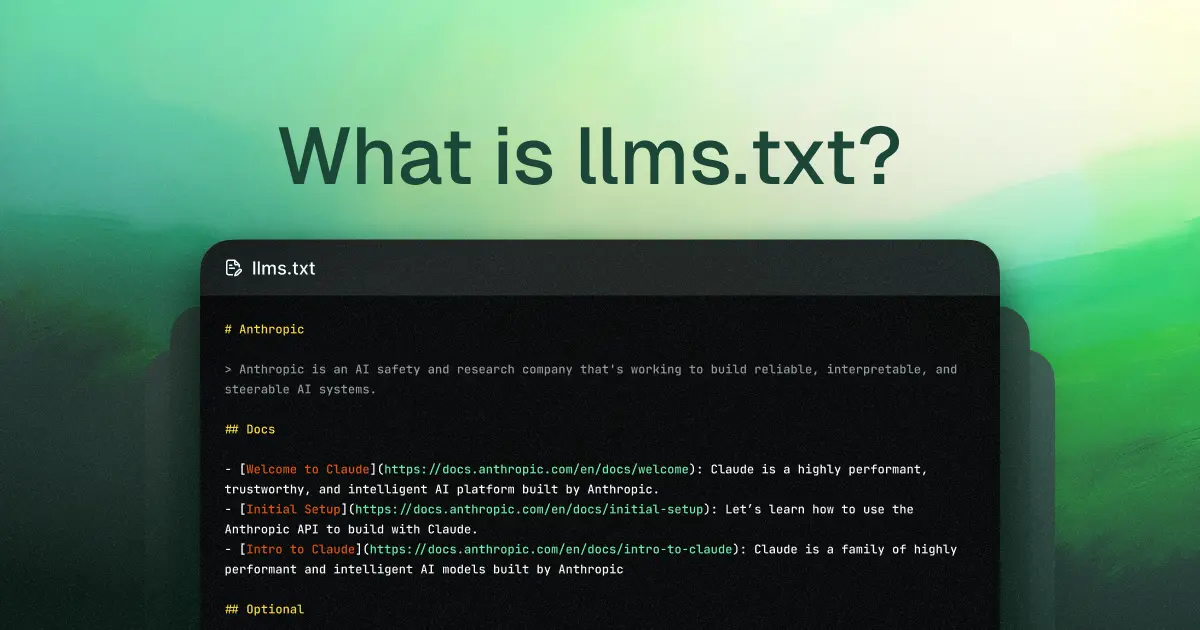
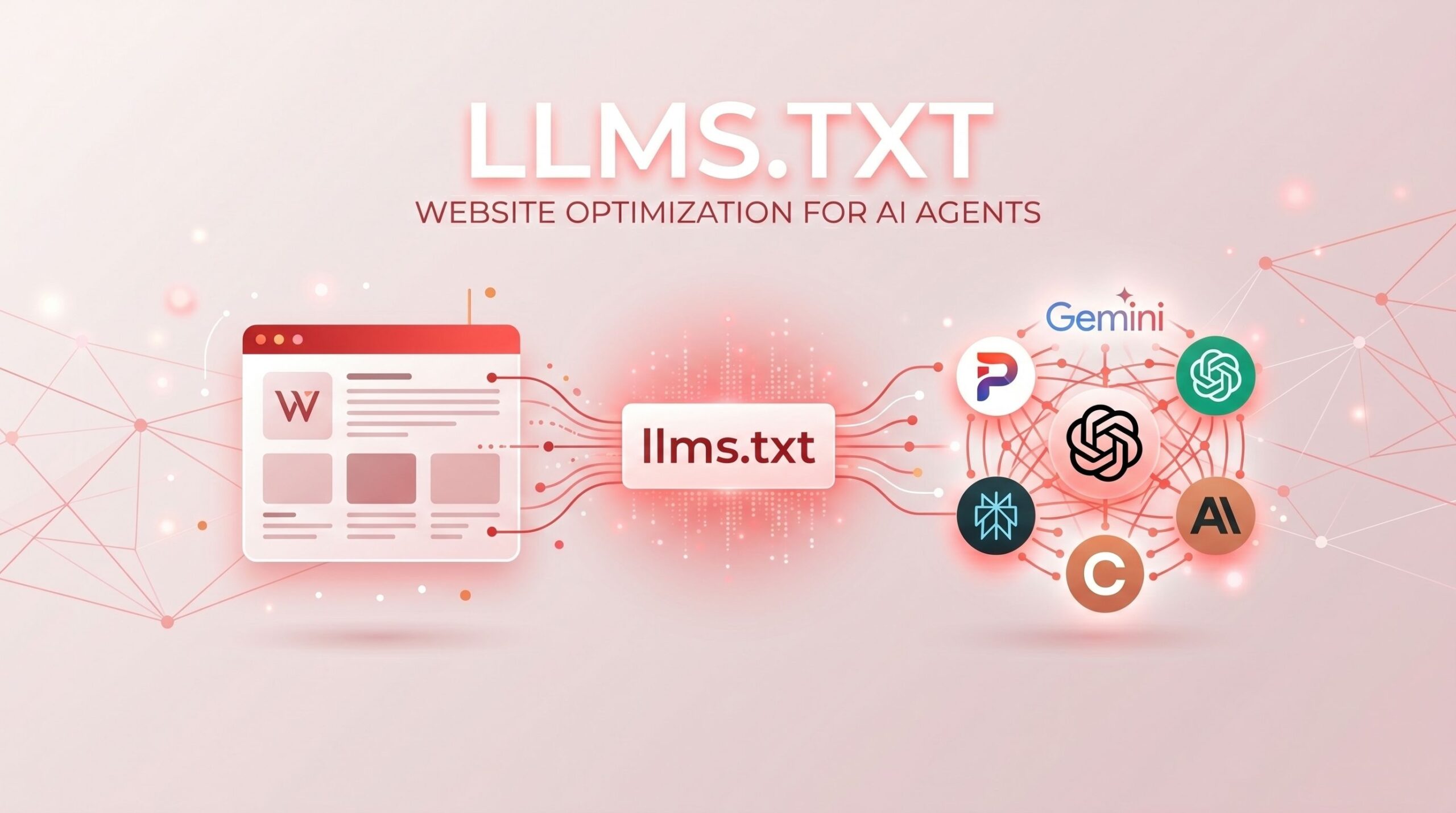
An llms.txt file is a public document placed in the root directory of a website (e.g., [yourwebsite.com/llms.txt](https://yourwebsite.com/llms.txt)) that provides a clean, highly curated, hierarchical map of your site’s content specifically formatted for Large Language Models.
Unlike search engine crawlers that parse complex HTML, JavaScript, and CSS to index a page, AI models process information best when it is stripped down to clean text. The llms.txt standard uses Markdown, a lightweight formatting language that is perfectly legible to both human developers and AI models.
Instead of forcing an AI agent to guess which pages matter or choke on messy sidebar navigation, the file explicitly tells the model: “Here is exactly what this site is about, and here are the direct paths to our most important documentation, resources, or products.”
How the Specification Works?
The standard implementation involves creating a structured text file using specific Markdown headings. The specification typically outlines two variations:
/llms.txt
The /llms.txt file serves as the primary, high-level index for AI agents exploring your website. Written in clean Markdown, it provides a concise summary of your platform’s purpose alongside a curated list of essential URLs. Instead of forcing a language model to crawl messy HTML or guess site hierarchy, this file offers a streamlined roadmap, highlighting your core documentation, service structures, or product pillars to ensure fast, accurate context retrieval.
/llms-full.txt
The /llms-full.txt file acts as a comprehensive, deep-dive repository designed for complete data ingestion. Rather than simply linking to internal pages, this secondary file rolls up the actual full text of your critical resources into a single, massive Markdown document. This layout allows AI models and developers to read, parse, and analyze your entire corpus of information in a single request, eliminating multi-page scraping friction entirely.
A Basic llms.txt Architecture
A standard file follows a clean, predictable hierarchy:
# Site or Project Name
> A concise, one-paragraph summary of what the website or company does. This provides immediate context to the LLM.
An optional section containing general guidelines on how to interpret the links below or specific system prompts for the AI agent.
## Core Resources
– [Getting Started](/docs/intro): A step-by-step guide for new users.
– [API Reference](/docs/api): Complete technical specifications for integrations.
## Product Catalog
– [Enterprise Tier](/products/enterprise): Features and pricing for scale operations.
– [Core Features](/products/features): Breakdown of our primary software modules.
The Strategic Difference: Robots vs. Sitemaps vs. LLMs
To understand why this file exists, look at how it complements traditional web standards:
File |
Primary Target |
Core Purpose |
Format |
| robots.txt | Search Engine Bots (Googlebot, Bingbot) | Gatekeeping: Specifies which folders or URLs are blocked from being crawled. | Plain Text (Directives) |
| sitemap.xml | Search Engine Crawlers | Discovery: A raw list of every indexable URL to ensure no pages are missed. | XML |
| llms.txt | AI Models & Agents (Gemini, ChatGPT, Claude) | Comprehension: A curated, context-rich roadmap explaining what the content means. | Markdown |
Do You Need to Know (and Implement) It?
Not every website needs to rush to upload an llms.txt file today, but it is rapidly shifting from a niche developer experiment to an essential asset for specific types of digital platforms.
Who Needs It Immediately?
Websites relying heavily on AI visibility require this file now. If your platform serves users who research through generative search, use AI chatbots, or pull technical data via automated agents, implementing a structured markdown index prevents data fragmentation, reduces AI hallucinations, and ensures your brand is accurately cited in generative answers.
SaaS and Technical Products
Platforms managing developer documentation, software frameworks, or complex APIs benefit immensely from this standard. Tech-savvy users frequently feed documentation URLs directly into AI assistants to write code, debug errors, or understand system integrations. Providing an structured text layout allows these models to ingest technical specs instantly, generating accurate code snippets and deployment instructions without getting trapped in complex UI layouts or slow site scripts.
Complex Service Providers & E-commerce
Businesses handling multi-layered service offerings or extensive product catalogs need structured markdown files to protect their brand data. When AI engines scrape traditional e-commerce or local service layouts, they often misinterpret tiered pricing, regional availability, or shipping policies. A clean directory maps out exact product categories and service structures, helping conversational assistants deliver precise answers to transactional customer queries without confusing user intent.
Content Hubs & Publishers
Media outlets, educational platforms, and industry blogs must protect their intellectual property while maximizing search visibility. When generative search platforms synthesize answers from across the web, standard articles are often misquoted or stripped of critical context. Maintaining an organized text index guides AI systems directly to your authoritative, original insights, maximizing your chances of securing prominent source citations and driving organic traffic back to your site.
Why It Matters for GEO? (Generative Engine Optimization)
When users ask an AI-driven search engine a question, the platform often conducts a rapid background search to pull context from the web.
Websites with clean, concise Markdown roadmaps make it incredibly easy for an AI agent to quickly pull accurate data within its limited context window. By reducing the computational friction for the AI, you significantly increase the chances of your brand being accurately cited as the primary source in the generated answer.
How to Get Started?
Implementing the file is incredibly low-risk and takes very little technical overhead.
Draft the File
Begin by creating a plain text document using clear, hierarchical Markdown. Write a concise, one-paragraph summary at the top to give language models immediate context about your business or platform. Follow this summary with organized headings and bulleted lists containing direct, absolute links to your most important pages. Keep your descriptions entirely factual, precise, and free of marketing fluff so AI agents can parse your core information efficiently.
Upload to Root
Once your Markdown file is ready, have your development team upload it directly to the root directory of your website. The file must resolve cleanly at a public URL, specifically [https://yourdomain.com/llms.txt](https://yourdomain.com/llms.txt). Placing it in the root ensures that automated AI crawlers, developer scripts, and generative search engines can instantly locate the file using standard web protocols, mirroring how traditional search bots automatically check for your site’s robots.txt file.
Automate If Necessary
For large-scale websites, enterprise platforms, or dynamic content hubs, manual updates can quickly become inefficient. Instead of editing the file by hand every time you launch a new product or update documentation, utilize open-source plugins, scripts, or framework extensions. Modern content management systems and documentation tools like WordPress or Docusaurus can automatically generate and sync your text file directly from your existing sitemaps, keeping your data current.
Final Thoughts
The landscape of web search is fundamentally changing, and websites must adapt to how AI processes information. Implementing an llms.txt file is a low-risk, high-reward strategy that bridges the gap between traditional web design and generative discovery. By providing clean, structured Markdown, you ensure AI agents interpret your brand accurately. Take control of your digital footprint now to secure your visibility in the rapidly growing generative search landscape.