
For local business owners, the digital marketing landscape often feels like a tug-of-war. You might find yourself asking: “Should I focus on ranking on Google, or should I be posting more on Instagram?”
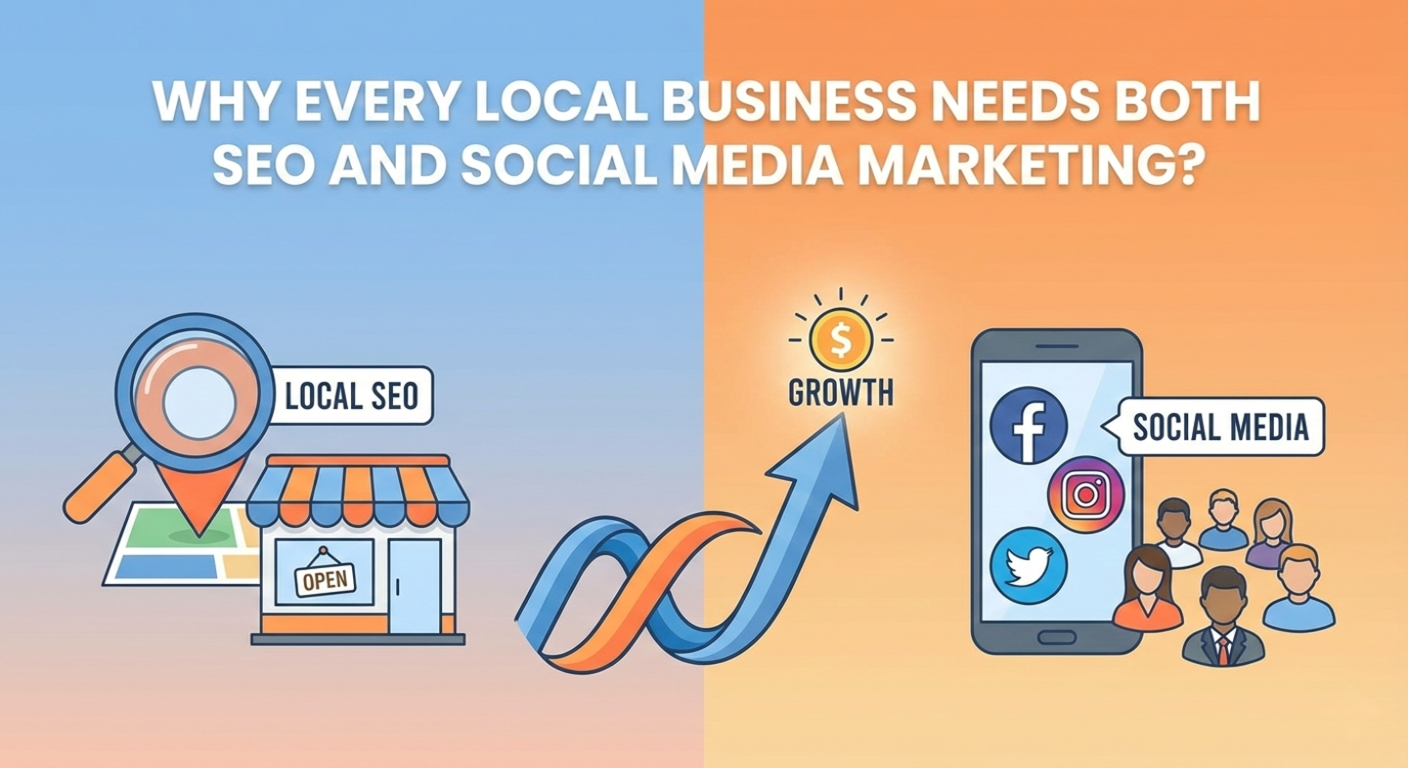
The truth? Choosing one over the other is like trying to ride a bike with only one pedal. While Search Engine Optimization (SEO) and Social Media Marketing (SMM) serve different purposes, they function as a powerhouse duo that drives growth, builds trust, and—most importantly—increases revenue.
SEO: The “Pull” Strategy (Finding You When They Need You)
Search Engine Optimization is often referred to as a “pull” strategy because it draws consumers toward your business exactly when they are actively seeking a solution. Unlike traditional advertising that interrupts a user’s experience, SEO positions your brand as the answer to a specific problem. By optimizing your digital presence, you ensure that when a potential customer triggers a search, your business is the destination they choose, effectively pulling high-intent traffic directly into your sales funnel.
Capturing High-Intent Local Traffic
When a local customer searches for a service “near me,” they are usually ready to make a purchase or visit a storefront immediately. This specific type of search intent is incredibly valuable because the “pull” happens at the peak of the consumer’s need. By optimizing your Google Business Profile and localized keywords, you ensure your business appears in the coveted Map Pack. This visibility captures motivated users at the precise moment they are looking to spend money in your area.
Building Long-Term Organic Authority
Unlike social media posts that disappear from feeds within hours, SEO serves as a long-term asset that builds equity over time. By consistently producing high-quality, keyword-optimized content, your website earns authority in the eyes of search engines like Google. This sustainable approach means that a single well-written blog post or service page can continue to “pull” in new leads for years without additional ad spend. It creates a reliable, evergreen source of traffic that grows more effective as your rankings improve.
Establishing Trust Through Search Rankings
There is a psychological advantage to appearing on the first page of search results. Users inherently trust Google’s algorithm; therefore, a high ranking acts as a silent endorsement of your business’s credibility. When your business consistently appears at the top for relevant industry terms, it establishes you as a local leader. This “pull” isn’t just about clicks—it is about attracting customers who already perceive your brand as a professional and trustworthy authority before they even land on your website.
Social Media: The “Push” Strategy (Building the Relationship)
While SEO waits for a user to type a query, Social Media Marketing is a “push” strategy that proactively places your brand in front of potential customers during their daily digital habits. This approach isn’t about waiting for a problem to arise; it’s about creating a presence, sparking interest, and nurturing a community before a need even exists. By pushing engaging visuals and stories into social feeds, you build the brand familiarity that makes your business the obvious choice later.
Humanizing Your Local Brand Identity
Social media provides a unique platform to “push” the personality of your business directly to your local community. Unlike a static website, platforms like Instagram and Facebook allow you to share behind-the-scenes content, employee stories, and real-time updates that make your brand feel human and approachable. This constant stream of relatable content builds an emotional connection with your audience. When customers feel like they know the people behind the counter, they are far more likely to choose you over a faceless competitor.
Staying Top-of-Mind Through Consistent Engagement
The greatest strength of a push strategy is its ability to maintain “top-of-mind” awareness through regular interaction. By showing up consistently in a user’s feed with helpful tips, polls, or beautiful imagery, you ensure that your business remains a familiar name. This passive reinforcement means that when a consumer eventually requires a service you offer, they don’t even need to go to a search engine; your brand is already the first one that comes to their mind because of your frequent presence.
Leveraging Social Proof and Viral Reach
Social media allows you to push your reputation forward through the power of social proof and community sharing. When you post a success story or a customer shares a photo tagging your location, that endorsement is pushed out to their entire network of friends and family. This digital word-of-mouth creates a ripple effect that search engines simply cannot replicate. By incentivizing engagement and sharing, you turn your existing followers into a voluntary sales force that pushes your brand’s reach into entirely new local demographics.
The Synergy: How They Work Together
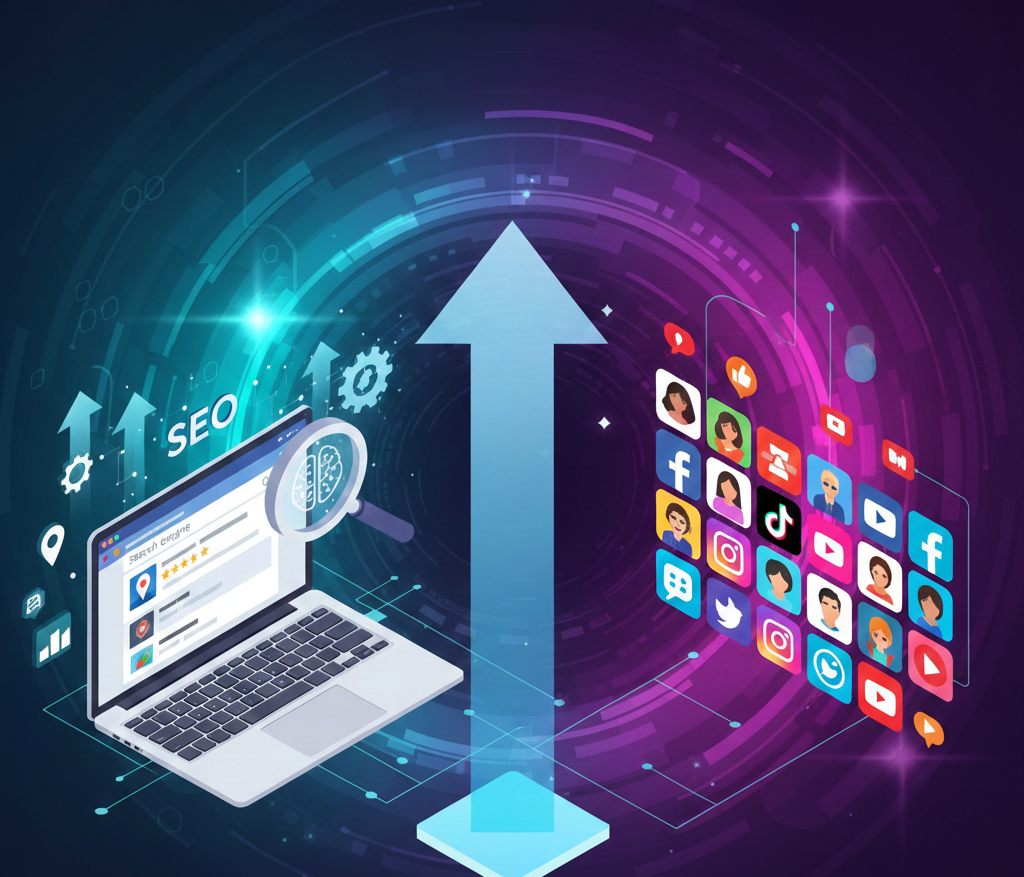
When you combine these two forces, you create a “Digital Ecosystem” where one feeds the other.
Feature |
SEO (Search) |
Social Media (SMM) |
| Primary Goal | High Intent / Conversion | Awareness / Engagement |
| Speed of Results | Slow & Steady (Months) | Fast & Viral (Days/Weeks) |
| Customer Mindset | “I need a solution now.” | “I’m browsing/connecting.” |
| Content Type | Informative, Structured | Visual, Personality-driven |
The “Search-to-Social” Loop
A customer finds you on Google via a local search (SEO). They click your website, but they aren’t ready to buy yet. They click your Instagram icon to see if you’re “legit.” Seeing your active community and recent projects (SMM) gives them the confidence to finally book your service.
Better Together: The Data Advantage
Combining SEO and social media creates a powerful data feedback loop that removes the guesswork from your marketing strategy. While SEO provides cold, hard data on what people are searching for, social media offers real-time qualitative insights into how they feel and react. By analyzing these two distinct data sets together, local business owners can identify emerging market trends, understand customer pain points more deeply, and allocate their budget toward the specific platforms and messages that yield the highest conversion rates.
Keyword Discovery
Social media is a goldmine for uncovering “natural language” keywords that traditional SEO tools might miss. By monitoring the specific questions, slang, and concerns voiced in your comments and direct messages, you can identify high-value topics. Transforming these real-world inquiries into SEO-optimized blog posts ensures your website answers exactly what locals are asking.
Content Distribution
A brilliant SEO blog post is only effective if people actually read it. Social media serves as the ultimate distribution engine, allowing you to “push” your evergreen website content directly to an engaged audience. This synergy drives immediate traffic, encourages social sharing, and signals to search engines that your content is relevant and authoritative.
The Bottom Line
SEO gets you found, but Social Media gets you chosen. For a local business, relying on just one is leaving money on the table. By integrating both, you cover the entire customer journey—from the first “near me” search to the final loyal follow.