
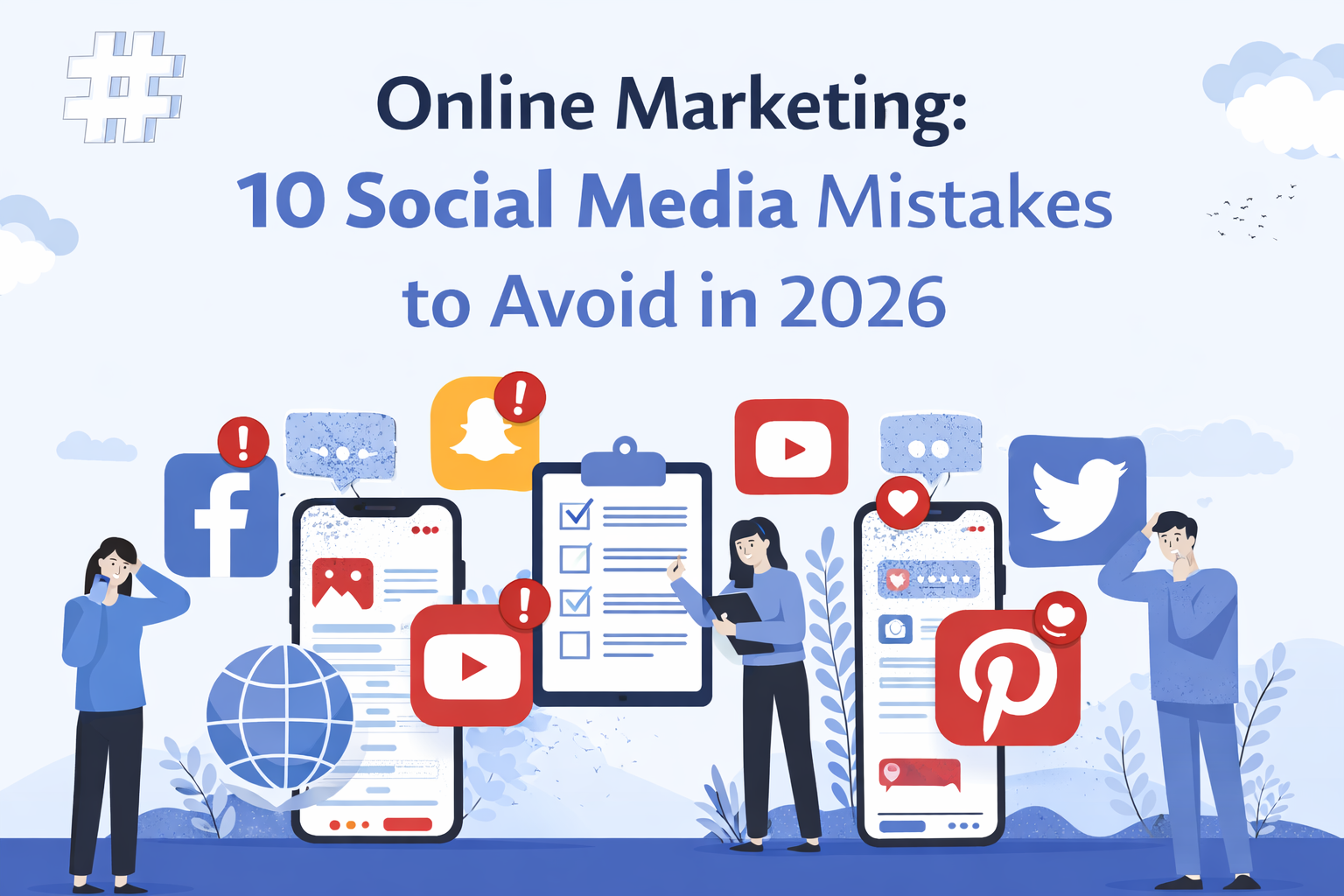
The social media landscape of 2026 is a far cry from the “post and pray” era of the early 2020s. Today, algorithms are driven by deep-learning predictive models, and users have developed a “sixth sense” for spotting generic, AI-manufactured content.
If your engagement is stalling or your reach has hit a plateau, you might be falling into these common traps. Here are the 10 social media mistakes you must avoid to stay competitive this year.
Treating AI as a “Set and Forget” Strategy
In 2026, relying solely on generative AI to produce your brand’s voice is a recipe for mediocrity. While these tools are faster than ever, they lack the lived experience and emotional intelligence that build true community. AI should serve as your sophisticated drafting partner, not your creative director. Strategic success now hinges on the “human-in-the-loop” model, where your unique insights refine raw machine outputs into relatable content.
The Risk
Without human oversight, your feed becomes a sea of “vanilla” content that fails to trigger emotional responses. Automated systems often hallucinate facts or miss cultural nuances, leading to brand misalignment. As users become experts at spotting AI-generated patterns, your engagement will plummet because your audience no longer feels a genuine connection to your brand’s synthetic personality.
The Fix
Use AI for high-level brainstorming, data analysis, and structural drafting, but mandate a final human edit for every post. Infuse your content with personal anecdotes, current industry opinions, and a distinct brand “DNA” that machines cannot replicate. This hybrid approach ensures you maintain the efficiency of modern technology without sacrificing the authenticity that drives long-term follower loyalty.
Ignoring “Social Search” Optimization
Social platforms have officially transcended their “feed” origins to become the primary search engines for younger demographics. If you aren’t treating your TikTok captions and Instagram bios with the same SEO rigor as a blog post, you are invisible to millions. 2026 is the year where “discoverability” through keywords replaces the old “virality” through luck, making technical optimization a non-negotiable part of your creative workflow.
The Risk
Failing to optimize for social search means your high-quality videos and graphics remain buried in the digital abyss. Even the best content cannot perform if the platform’s algorithm cannot categorize it. You lose out on intent-driven traffic—users actively looking for solutions you provide—resulting in wasted production hours and a stagnant follower count despite your consistent posting efforts.
The Fix
Incorporate semantic keyword research into your social strategy. Use primary keywords in the first two lines of your captions, add descriptive alt-text to every image, and utilize on-screen text overlays in videos. This helps platform crawlers understand your content context. By optimizing for search, you ensure your posts continue to gain views months after the initial publishing date.
Prioritizing Polish Over Authenticity
The era of the “perfectly curated” aesthetic has been replaced by a demand for “lo-fi” reality. In 2026, high-production commercials often feel intrusive and untrustworthy to users scrolling through their personal feeds. The mistake many brands make is spending thousands on sleek videos that get ignored, while a simple, raw clip filmed on a smartphone could have garnered ten times the engagement by feeling “real.”
The Risk
Over-polished content creates a psychological barrier between you and your audience. It signals “advertisement” immediately, triggering a subconscious “scroll-past” reflex. When your brand feels too corporate or manufactured, you lose the ability to build rapport. In a landscape where trust is the primary currency, looking “too perfect” can actually make your business seem distant and unrelatable.
The Fix
Pivot your production toward “raw-cut” styles and behind-the-scenes transparency. Use smartphone footage for Stories and Reels to blend into the user’s natural feed. Highlight employee stories and unedited customer testimonials to show the human side of your operation. Authenticity doesn’t mean low quality; it means prioritizing the truth of the moment over the shine of the studio.
Spreading Thin Across Too Many Platforms
Many marketers still fall into the trap of wanting to be everywhere at once. In 2026, the unique cultures of platforms like Threads, TikTok, and LinkedIn have diverged so significantly that “cross-posting” the same content no longer works. Trying to maintain a presence on every new app leads to a diluted message and an exhausted team, ultimately providing a poor experience for your audience on every channel.
The Risk
Attempting to conquer every platform results in a “jack of all trades, master of none” scenario. Your content becomes generic to fit all formats, losing its impact. Burnout becomes inevitable as resources are stretched thin, leading to inconsistent posting and a fragmented brand identity. Instead of a thriving community, you end up with several ghost-town profiles that offer no value.
The Fix
Identify the two or three platforms where your core audience is most active and double down on them. Master the specific nuances, trends, and formatting of those chosen channels. By focusing your creative energy, you can produce higher-quality content that resonates deeply with a specific demographic, leading to better conversion rates and a much more manageable marketing workflow.
Using One-Way Communication
Broadcasting is for television; social media is for conversation. A major mistake in 2026 is treating your profiles like a digital billboard where you post and immediately disappear. Algorithms now heavily weight “meaningful social interaction,” meaning accounts that don’t engage with their followers are suppressed. If you aren’t talking with your audience, you are eventually just talking to yourself in an empty digital room.
The Risk
When you ignore comments and messages, you signal to both the audience and the algorithm that you don’t value community. This leads to a rapid decline in organic reach, as platforms prioritize content that sparks active dialogue. Furthermore, you miss out on crucial customer feedback and the opportunity to resolve concerns before they turn into public reputation crises.
The Fix
Schedule dedicated “community management” blocks every day to respond to comments, answer direct messages, and participate in industry-related discussions. Ask open-ended questions in your captions to encourage replies. By fostering a two-way dialogue, you build a loyal “inner circle” of advocates who feel seen and heard, which significantly boosts your account’s authority and overall visibility.
Neglecting Predictive Analytics
Relying on “vanity metrics” from the past is a 2026 death sentence. Many brands look at what worked last month to plan next month, but social trends now move at the speed of AI. The mistake is ignoring predictive tools that can forecast what your audience will care about before it becomes mainstream. If you aren’t using data to look forward, you are always playing a losing game of catch-up.
The Risk
Operating without predictive insights leaves you reactive rather than proactive. You end up jumping on trends just as they are dying, making your brand look out of touch. Without understanding shifting behavioral patterns, your content strategy remains a guessing game, leading to inconsistent performance and a failure to capitalize on emerging market needs before your competitors seize the opportunity.
The Fix
Invest in modern analytics tools that offer trend forecasting and sentiment analysis. Look beyond likes and shares to track “save” rates and “share” velocity, which indicate future interest. Use this data to identify “content gaps” in your niche. By anticipating what your audience wants next, you position your brand as a forward-thinking leader rather than a follower.
Overlooking User-Generated Content (UGC)
In an era where AI can generate anything, the “real” has become premium. Brands that rely solely on their own marketing materials are missing the most persuasive tool in the 2026 toolkit: the voice of the customer. Failing to integrate UGC into your strategy makes your claims feel biased. People no longer buy what brands say about themselves; they buy what other people say about those brands.
The Risk
A feed that lacks customer voices feels sterile and untrustworthy. It places the entire burden of proof on your shoulders, which is a hard sell in a skeptical market. Without UGC, you lose the “social proof” necessary to convert hesitant browsers into buyers. Your marketing remains a one-sided pitch rather than a community-backed endorsement, making customer acquisition much more expensive.
The Fix
Create a structured system to encourage, collect, and share content created by your customers. Use branded hashtags, run contests, or simply ask for photos in your post-purchase emails. Reposting high-quality UGC (with proper credit) builds immense trust and provides you with a constant stream of authentic material that resonates far better than any traditional advertisement ever could.
Hard-Selling in Every Post
The 2026 consumer is highly resistant to traditional sales pitches on social media. A common blunder is treating your Instagram or TikTok feed like a 24/7 shopping channel. Constant “buy now” calls-to-action (CTAs) create friction and lead to “unfollow” fatigue. If every post asks for money without providing value first, you’ll find your audience shrinking as they move toward accounts that actually enrich their lives.
The Risk
Over-selling leads to immediate audience alienation and high churn rates. When your content provides no educational or entertainment value, users have no reason to stay subscribed. Algorithms also tend to throttle posts that appear overly promotional unless they are paid ads, meaning your organic reach will suffer if your feed looks like a constant stream of product pitches.
The Fix
Adopt the 80/20 Rule: 80% of your content should be dedicated to educating, entertaining, or inspiring your audience, while only 20% should be a direct promotion. Focus on solving problems or telling stories that involve your product naturally. By leading with value, you build the “know, like, and trust” factor that makes the eventual sale feel like a suggestion.
Inconsistent Posting Schedules
The algorithms of 2026 are programmed to reward “reliable” creators. A major mistake is “burst posting”—uploading ten things in two days and then disappearing for two weeks. This inconsistency confuses the algorithm’s ability to categorize your account and frustrates followers who expect regular updates. In the fast-paced world of social media, being “out of sight” truly means being “out of mind” for both fans and robots.
The Risk
Inconsistency kills your momentum and signals to platforms that your account is “inactive” or low-priority. This results in a massive drop in organic reach that can take weeks of daily posting to recover. Furthermore, your audience loses the habit of checking your page, allowing competitors who post regularly to capture their attention and dominate their daily feed.
The Fix
Create a sustainable content calendar that you can actually stick to long-term. Quality is vital, but so is a predictable rhythm. It is significantly better to post high-value content three times a week consistently than to post every day for a week and then vanish. Use scheduling tools to maintain your presence during busy periods or holidays.
Failing to Disclose AI and Sponsored Content
Transparency is no longer optional; it’s a legal requirement in 2026. Many brands mistakenly think they can “sneak” a sponsored post or an AI-generated image past their audience without disclosure. This lack of honesty is a major risk to brand integrity. With regulators and platforms now using automated tools to detect undisclosed promotions, trying to hide your associations will eventually lead to public and legal backlash.
The Risk
Non-disclosure leads to severe penalties, including account suspension, heavy fines from regulators like the FTC, and a total loss of consumer trust. Once an audience feels deceived by a brand or an influencer, that relationship is almost impossible to repair. In a transparent digital age, getting “caught” hiding an ad can result in a permanent “canceled” status.
The Fix
Be radically transparent about your partnerships and your use of technology. Use the built-in “Paid Partnership” labels on every platform and clearly state when AI was used to create or significantly alter a visual. Honesty actually builds respect; your audience will appreciate being treated with intelligence, leading to higher quality engagement and a more sustainable brand reputation.
Conclusion
Success in 2026 requires balancing cutting-edge technology with human authenticity. By avoiding these ten mistakes, you shift from shouting into the void to building a resilient community. Focus on search optimization, consistent value, and radical transparency to ensure your social media strategy drives meaningful growth in an increasingly AI-driven world.