
The traditional “10 blue links” that have defined the internet for two decades are officially fading into the background. As we navigate 2026, the search landscape has shifted from a directory of websites to a sophisticated ecosystem of answers.
For businesses, this isn’t just a technical update; it’s a fundamental change in how customers discover brands. If your digital strategy is still built on 2022 tactics, you’re likely losing visibility to AI-generated summaries before a user ever has the chance to click your link.
Here is how Generative AI has rewritten the rules of search and what your business needs to do to stay relevant.
The Rise of “Zero-Click” Search and AI Overviews
In 2026, the search experience has shifted from a list of links to an ecosystem of instant answers. Driven by Google’s Gemini-powered Overviews, “zero-click” searches now account for over 60% of all queries. Users no longer need to visit external websites when AI provides comprehensive summaries, data, and comparisons directly on the results page. For businesses, this means traditional organic visibility is being replaced by a “citation-first” reality.
The Impact
The ripple effect of this shift is profound: organic click-through rates (CTR) for informational queries have plummeted by roughly 61%. High-ranking websites that once enjoyed steady traffic are seeing those visits “siphoned” by AI summaries that satisfy user intent instantly. While impressions may actually increase as AI cites your brand, the actual transition of a searcher from Google to your website has become significantly harder to achieve.
The Business Reality
For modern enterprises, “winning” at SEO is no longer about raw traffic; it is about Brand Salience. If your content isn’t citable or structured for AI extraction, it effectively becomes invisible. Success now requires a shift toward Generative Engine Optimization (GEO)—prioritizing expert-led data, structured schema, and authoritative mentions that ensure your brand is the “trusted source” the AI recommends, even if the user never clicks.
SEO is Evolving into GEO (Generative Engine Optimization)
Traditional SEO focused on keywords and backlinks. Generative Engine Optimization (GEO) focuses on Brand Mentions and Citations.
AI models like Gemini, ChatGPT, and Perplexity don’t just “rank” pages; they “reason” through them. They look for:
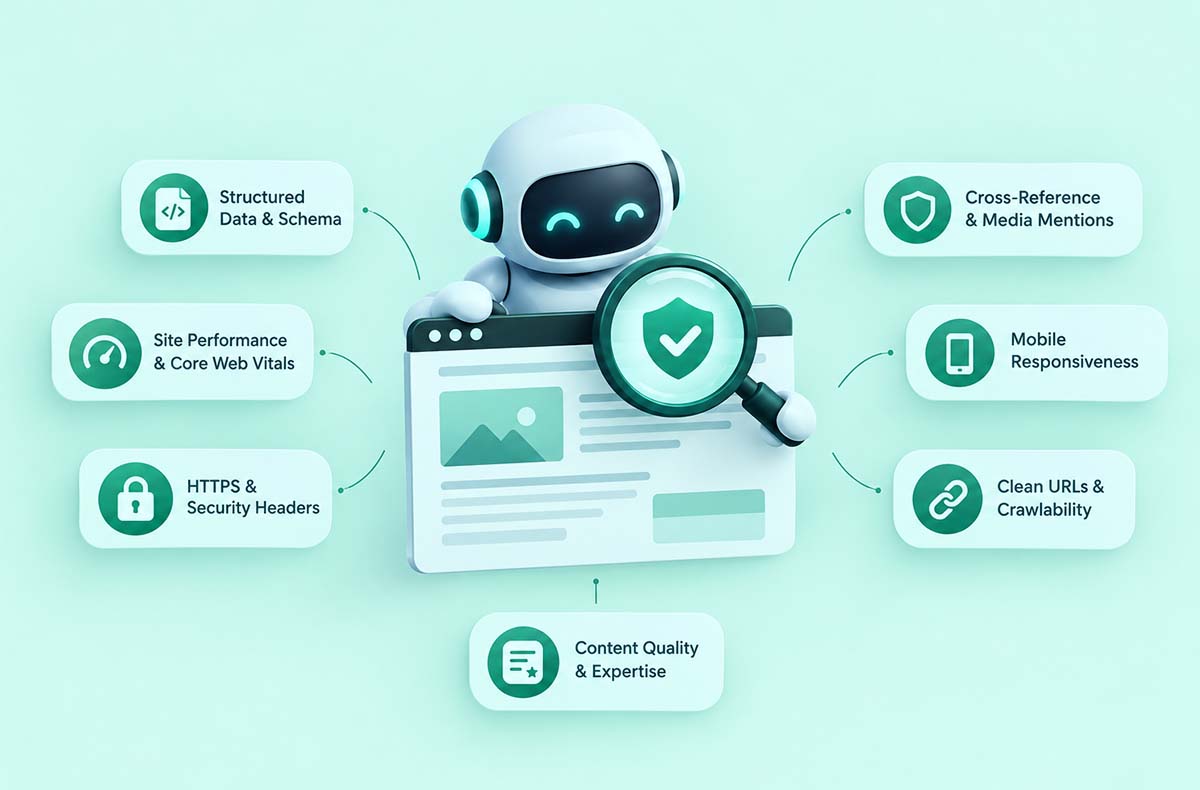
Structured Data
In the age of AI, Schema markup is no longer optional—it is the digital language search engines use to understand your context. By implementing structured data, you provide AI models with clear “hooks” to extract your pricing, FAQs, and product specs. This technical precision ensures your business is accurately represented in AI-generated tables, side-by-side comparisons, and rich snippets.
Entity Strength
AI models rank brands based on their Entity Strength, which is a measure of how clearly your business is recognized as a distinct, authoritative “node” on the web. This isn’t just about backlinks; it’s about consistent mentions across high-authority news sites, industry journals, and social platforms. The stronger your entity, the more likely AI will confidently recommend your brand.
Conversational Intent
Search has shifted from fragmented keywords to natural language queries. Users now ask AI complex, multi-layered questions like “What is the best CRM for a mid-sized legal firm?” rather than searching for “legal CRM.” To stay visible, your content must mirror this conversational tone, answering specific “long-tail” questions directly and providing the nuanced expert advice that AI algorithms prioritize.

E-E-A-T is Now Your “Search Moat”
With AI-generated “slop” flooding the internet, search engines have doubled down on Experience, Expertise, Authoritativeness, and Trustworthiness (E-E-A-T).
AI cannot replicate human experience. Businesses that win in 2026 are those that lean into:
First-Person Case Studies
AI can summarize facts, but it cannot replicate lived experience. First-person case studies are your most powerful defense against generic AI content because they provide unique, “human-only” insights. By detailing specific challenges, proprietary workflows, and real-world results, you offer high-value evidence that search engines prioritize. These narratives build immediate trust with your audience while proving your brand’s practical expertise.
Original Research
In an era where AI recirculates existing data, original research makes your website an “Information Gain” powerhouse. By publishing proprietary surveys, industry benchmarks, or internal data analysis, you create “citable assets” that AI models and other creators must reference. This not only boosts your authority but ensures your brand remains a primary source in the generative search ecosystem.
Expert Bylines
Expert bylines are essential for establishing E-E-A-T (Experience, Expertise, Authoritativeness, and Trustworthiness). By attributing content to verified professionals with established digital footprints, you signal to both users and search algorithms that your information is credible. High-quality authorship transforms a standard blog post into a trusted industry resource, making it significantly more likely to be featured in AI summaries.
Commercial Intent Remains the Safe Haven
While informational traffic is shrinking, Commercial and Transactional intent queries remain resilient. When a user is ready to buy (“Best project management software for agencies”) or needs a local service (“Plumber near me”), they still prefer to browse options, read reviews, and click through to a business.
Pro-Tip: Rebalance your content calendar. Shift 30% of your informational “how-to” budget into high-intent comparison guides, “Best of” lists, and case studies that drive direct conversions.
Summary Table: The Search Shift
Feature |
Old Search (Traditional SEO) |
New Search (Generative/GEO) |
| Primary Goal | Rank #1 for a keyword | Be the “Cited Source” in AI answers |
| Success Metric | Clicks and Organic Traffic | Brand Impressions & Assisted Conversions |
| Content Type | Keyword-optimized articles | Highly structured, expert-led data |
| User Journey | Search → List of Links → Click | Search → AI Summary → Action/Visit |
Conclusion
The search landscape has shifted from clicking links to consuming AI-driven answers. To thrive, businesses must move beyond keywords toward Generative Engine Optimization (GEO). By prioritizing original research, structured data, and human expertise, you ensure your brand isn’t just indexed by AI—it’s cited as the definitive authority in every conversation.