

In the early 2020s, the debate was whether AI could translate. By 2026, the question has shifted: Is “technically correct” AI translation enough to win a global market?
As we navigate a year where Real-Time Speech-to-Speech (S2ST) and Agentic AI have become enterprise standards, the barrier to entry for international business has never been lower. However, the barrier to resonance has never been higher.
The State of Play: AI Translation in 2026
In 2026, AI translation has transcended simple word substitution to become a foundational layer of global commerce. We’ve moved beyond static Neural Machine Translation (NMT) into the era of Agentic workflows, where AI systems independently manage tone, cultural nuance, and technical accuracy. No longer a mere drafting tool, AI now handles massive localized rollouts in real-time, allowing brands to communicate with global audiences with unprecedented speed and near-human fluidity. We are no longer in the era of “Machine Translation Post-Editing” (MTPE) where humans simply fix “broken” sentences. In 2026, AI translation is defined by three pillars:
Hyper-Contextual LLMs
By 2026, Large Language Models have mastered the “unspoken.” Unlike earlier iterations, these Hyper-Contextual engines ingest your entire brand history, previous style guides, and regional slang before translating a single syllable. They don’t just convert text; they adapt the “vibe” to match specific search intents, ensuring your technical documentation stays clinical while your social media copy remains punchy and culturally relevant.
Multimodal Orchestration
Translation is no longer confined to text on a screen. Modern Multimodal Orchestration synchronizes linguistic shifts across audio, video, and interactive interfaces simultaneously. In 2026, an AI agent can translate a live keynote, adjust the speaker’s lip movements via deep-fake synthesis, and update on-screen graphics in real-time. This creates a seamless, “borderless” experience where the medium and the message evolve together across every sensory touchpoint.
Semantic Routing
To maximize ROI, 2026 enterprises utilize Semantic Routing to direct content to the most efficient engine. Not all content requires a trillion-parameter model; routing algorithms analyze the complexity of a request, sending high-stakes legal contracts to specialized, high-accuracy models while directing routine customer chats to lightweight, cost-effective processors. This intelligent triage ensures peak linguistic performance without the bloated overhead of a one-size-fits-all approach.
Where AI Still Hits the “Glass Ceiling”
Despite 90% accuracy in high-resource languages (English, Spanish, Mandarin), AI in 2026 still faces three “Hard Problems”:
The Cultural “Inside Joke”
While AI can translate a pun, it often fails to understand if that pun is offensive or irrelevant in a specific sub-culture. Hyper-localization requires knowing that a “Lunar New Year” campaign in Vietnam needs different visual and linguistic cues than one in China.
The Liability of Hallucination
In YMYL (Your Money, Your Life) sectors—specifically Legal, Medical, and Fintech—a 1% error rate is a 100% risk. 2026 has seen a rise in “Ethical AI Certifications” because businesses realized that “fast and cheap” is a liability when translating a surgical manual or a billion-dollar contract.
The “Mechanical” Fatigue
There is a growing phenomenon known as Digital Homogenization. When every brand uses the same AI models, every brand starts to sound the same. Human linguists are now “Creative Directors of Language,” tasked with injecting the soul, wit, and unique brand personality that AI naturally averages out.
Human + AI: The “Agentic” Workflow
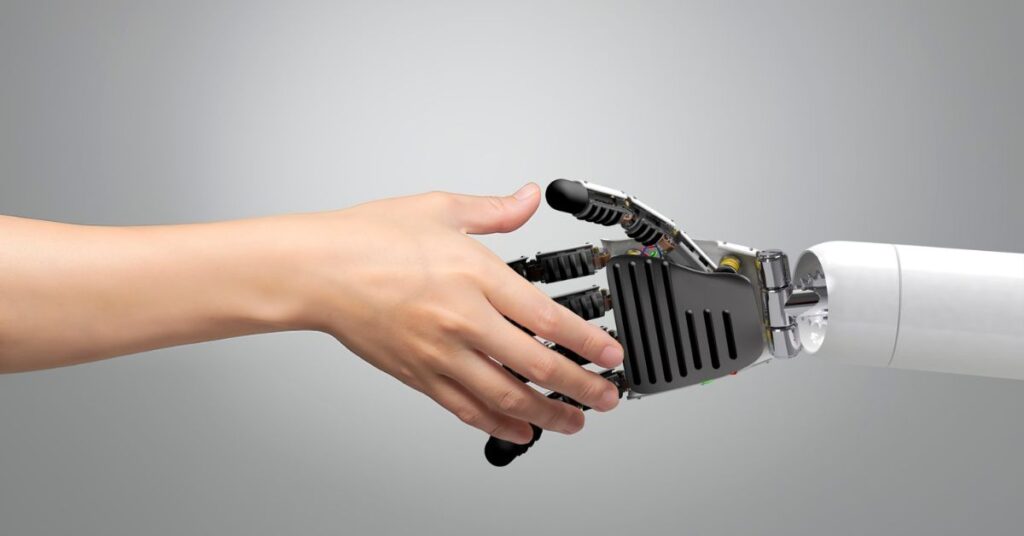
In 2026, the most successful translation services aren’t “AI-powered”—they are Human-In-The-Loop (HITL) Operations.
Feature |
AI Role (The Engine) |
Human Role (The Pilot) |
| Speed/Scale | Processes 1M+ words/sec | Sets the quality guardrails |
| Nuance | Predicts the most likely word | Chooses the most impactful word |
| Technical | Manages glossaries & code | Validates industry-specific logic |
| Strategy | Executes the workflow | Measures ROI and local sentiment |
The Verdict: Is AI Enough?
No. In 2026, AI is enough to be understood, but it is not enough to be trusted.
If your goal is internal documentation or basic customer support, AI is more than enough—it’s a miracle. But if your goal is market share, you need Hyper-Localization. This means moving beyond translation and into cultural adaptation.